 Skip to content
Find the notice or letter number printed in the upper right corner of the document – it will begin with “CP” or “LT” followed by numbers (example: CP504, LT11). Enter that number on the IRS’s official notice lookup page at irs.gov, or use the guide below to identify what your notice means and how urgently you need to respond.

What Is an IRS Notice or Letter?
The IRS mails millions of notices and letters every year. Most people assume any mail from the IRS means bad news – but that’s not always the case. Some notices confirm that your refund has been adjusted. Others flag a simple math error. And yes, some are serious warnings that carry legal deadlines you cannot afford to miss.
What separates a manageable situation from a costly one is almost always the same factor: how quickly you understand what the notice says and take the right action. In 2026, with IRS staffing cuts still affecting processing timelines and AI-accelerated enforcement tools being deployed for collections, response time matters more than ever.
Every IRS communication is identified by a code in the top right corner of the letter. That code – not the tone of the letter – tells you exactly what the IRS is doing and what they expect from you.
CP vs. LT: Understanding the Two Main Notice Types
Every notice from the IRS carries a code that identifies its purpose:
- CP notices (Computer Paragraph notices) are automatically generated by the IRS system. They often relate to balance due reminders, adjustments, or underreporting (e.g., CP14, CP501, CP503, CP504, CP2000).
- LT letters (Letter notices) are more formal and often involve collection actions or legal rights (e.g., LT11 Final Levy Notice, Letter 1058, Letter 3172).
- Other letters (e.g., 12C, 4883C, 5071C, 3219, 4800C) deal with identity verification, exam adjustments, or deficiency notices.
By looking up the code, you can immediately understand where you are in the IRS process.
Why Use the IRS Notice Lookup Tool?
Before looking up a specific number, it helps to understand the two primary categories the IRS uses.
| Notice Type | What It Stands For | What It Generally Means |
|---|---|---|
| CP | Computer Paragraph | Automated notice generated by IRS systems based on return data |
| LT | Letter Template | Typically more serious; often involves collections or enforcement action |
CP notices are system-generated based on tax return discrepancies, while LT notices are typically more serious and may involve collections or legal enforcement. That said, CP notices can also escalate to levies and liens – so no notice should be dismissed simply because it begins with “CP.”
You can find the CP or LTR number on the right corner of the letter. Review it carefully and keep it for your records. If the IRS asks you to respond, act by the due date.
The Most Common IRS Notices Explained (2026 Reference Guide)
Balance Due Notices – The Most Frequently Received
CP14 – Initial Balance Due
This is the most common IRS notice in circulation. It informs you that your return has been processed and the IRS believes you owe additional tax, including any penalties and interest that have already accrued. It is not yet an emergency, but it does require action. You can pay in full, set up a payment plan, or dispute the amount if you believe it is incorrect.
CP501 and CP503 – Reminder Notices
These follow CP14 if you do not respond. CP501 is the first reminder; CP503 is the follow-up. Each escalation brings you closer to enforced collection. If you are receiving these and have not yet engaged a tax professional, now is the time.
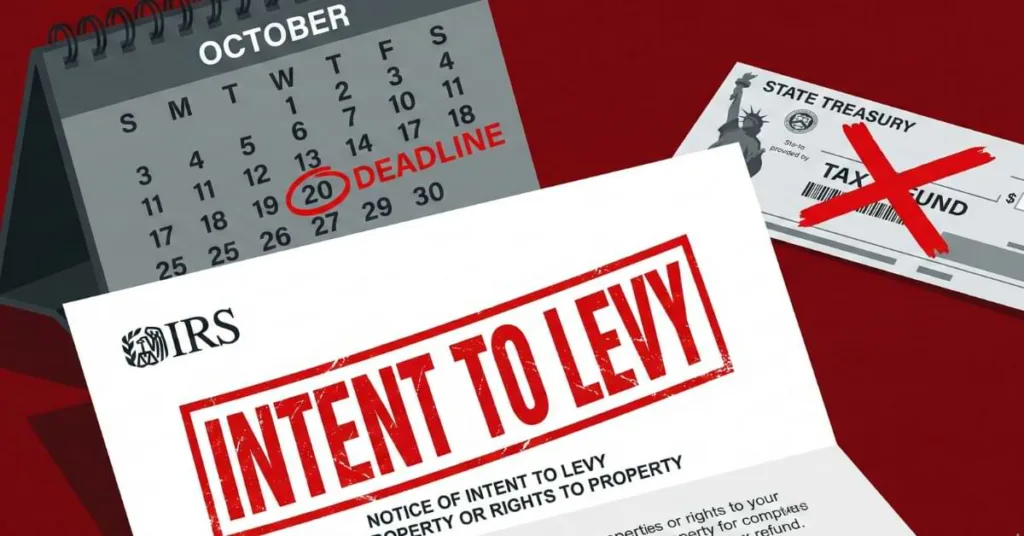
CP504 – Notice of Intent to Levy (State Refund)
This notice signals a sharp escalation. Unlike earlier balance-due letters (CP14, CP501, CP503), CP504 ramps up the urgency. CP504 immediately puts your state tax refund at risk of levy if you do nothing, and it signals that broader levies could follow if collection continues.
CP504 is not the final notice – but it is the last real warning before the IRS moves to seize wages and bank accounts. If you have received a CP504, visit our page on IRS tax resolution services to understand your options immediately.
Return Discrepancy Notices
CP2000 – Proposed Adjustment to Your Return
This notice is issued when the IRS finds a mismatch between the information you reported and what third parties – like employers or banks – reported. For example, if your W-2 shows more wages than what you entered, the IRS will propose a correction.
CP2000 is not a bill and not an audit. It is a proposal. You have the right to agree, partially agree, or dispute it entirely with supporting documentation. Missing the response deadline, however, converts the proposed change into an assessment.
CP12 – Refund Adjustment
The IRS corrected a math error or calculation mistake on your return, resulting in either a smaller or larger refund than you expected. Review carefully to confirm the adjustment matches your own records.
Identity and Verification Notices
Letter 4883C – Identity Verification Required
When the IRS suspects possible identity theft or cannot confirm your identity during return processing, this letter asks you to verify before your return is processed. Delays here directly delay your refund. Follow the instructions immediately – verification can be completed online or by phone.
Serious Collection and Enforcement Notices
LT11 / Letter 1058 – Final Notice of Intent to Levy
LT11 is the official final levy notice that explains your right to challenge the action through a hearing. This triggers your formal Collection Due Process (CDP) rights.
This is one of the most time-sensitive notices the IRS sends. You have 30 days from the notice date to request a CDP hearing – after which the IRS can legally seize wages, bank accounts, and other assets without further warning. If you have received an LT11, contact a CPA experienced in IRS collections immediately. Call our office at (305) 735-8366.
CP90 – Final Notice Before Levy (Certified Mail)
Similar in effect to LT11, CP90 is sent by certified mail and provides formal notification of levy rights. Receipt of CP90 means the IRS has not received full payment despite sending several previous notices about unpaid federal taxes. Time to act is critically short.
CP508C – Passport Revocation Warning
If you owe more than $62,000 in unpaid taxes and have not arranged payments, the IRS can notify the State Department to revoke your passport. This notice means your tax debt has been certified as “seriously delinquent.” If you need international travel for work or have expat tax complications, see our U.S. expat tax filing and IRS compliance page – and consider acting before the State Department receives formal notification.
Letter 3172 – Notice of Federal Tax Lien Filing
A tax lien attaches to your assets if you owe more than $10,000. While the IRS does not need to notify you before filing, it often sends this letter afterward. A lien is a public record that affects your ability to sell property, secure financing, or operate a business.
Business-Specific Notices
CP504B – Intent to Levy (Business)
The business equivalent of CP504. This notice warns that the IRS may seize business-owned assets if unpaid balances are not resolved. Business owners facing this notice should not attempt to navigate it alone – the exposure can extend to personally assessed trust fund recovery penalties.
Letter 1153 – Trust Fund Recovery Penalty
This letter means the IRS believes you are personally responsible for unpaid payroll taxes and is assessing a 100% Trust Fund Recovery Penalty. This is one of the most severe personal assessments the IRS can make against a business owner or responsible party. If you received this letter, call (305) 735-8366 before responding.
Can You View IRS Notices Online?
Yes. Through your IRS Online Account at IRS.gov, you can view your account transcript, see balance information, and in many cases access digital copies of notices. However, many formal collection notices – particularly those requiring certified mail – may not appear online immediately or in their complete form.
If you are unsure whether a letter you received is legitimate, verify it directly through the IRS website. Do not call a phone number printed on a suspicious letter without first confirming it against the official IRS.gov contact page. IRS impersonation scams increased significantly in 2025 and remain active in 2026.
Is Certified Mail From the IRS Always Bad News?
Not always – but it is always serious. The IRS uses certified mail to ensure there is proof of delivery for legal purposes. This typically applies to final notices before enforcement action, audit notifications, and formal assessments. The fact that a notice arrived by certified mail generally means the IRS considers your situation advanced enough that it needs a delivery record. It is almost never a routine communication.
What to Do After You Look Up Your Notice Number?
Once you have identified your notice:
Step 1 – Read the entire letter carefully. Note the notice number, the tax year(s) involved, the amount at issue, and – most critically – the response deadline.
Step 2 – Do not ignore it. Even if you cannot pay, responding before the deadline preserves your rights and often prevents automatic escalation.
Step 3 – Gather your records. Pull the tax return and supporting documents for the year referenced. Compare your records against what the IRS is claiming.
Step 4 – Do not respond without advice if the stakes are high. If you have received an LT11, CP504, CP90, Letter 1153, or any notice referencing a lien or levy, you are in territory where a professional response is not optional – it is essential.
Our team at Ed Parsons CPA handles IRS resolution cases across all notice types. If you received a notice and are unsure how to respond, you can also use our IRS notice lookup tool or explore our IRS streamlined filing options if unfiled returns are part of the underlying issue.
When an IRS Letter Says You Owe Money But You Don’t Agree
This is more common than most people realize. The IRS processes millions of returns automatically, and discrepancies between what you filed and third-party records (W-2s, 1099s, brokerage statements) can trigger automated notices that are simply wrong.
You have the right to dispute any IRS notice. However, disputing effectively requires documentation, specific written responses, and in many cases, knowledge of which IRS procedures apply. A CPA who handles resolution cases every day knows the difference between a dispute that can be resolved with a letter and one that requires a formal hearing.
If you have questions about an IRS letter or are ready to get professional representation, call (786) 265-8578 or book a consultation.
T