Skip to content
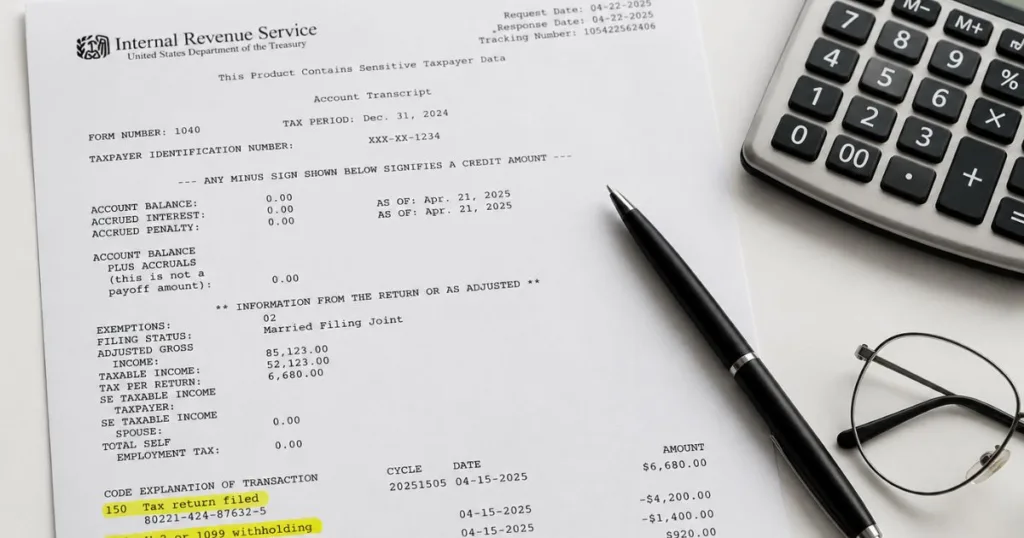
IRS transcript codes 150, 806, 766, and 768 are transaction codes on your IRS account transcript. Code 150 means your tax return was filed and your tax liability has been assessed. Code 806 shows your total withholding credits from W-2s and 1099s. Code 766 represents a tax credit applied to your account, such as the Child Tax Credit. Code 768 is the Earned Income Tax Credit. Together, these codes show how the IRS calculates whether you receive a refund or owe a balance.
If you have ever pulled up your IRS account transcript, you have probably seen a wall of numbers and dates that feel impossible to read. You are not alone. Millions of taxpayers check their transcripts each filing season trying to figure out where their refund stands.
Understanding four of the most common codes on your transcript can tell you whether your return is processing normally or whether something needs attention.
IRS Transcript Codes at a Glance
| Code | What It Means | What the Dollar Amount Shows | Good or Bad? |
| 150 | Tax return filed and tax liability assessed | Your total tax before credits and payments | Neutral |
| 806 | Withholding credit from W-2s and 1099s | Total federal tax withheld (shown as negative) | Positive |
| 766 | Tax credit applied to your account | Credit amount: Child Tax Credit, education credits, or estimated payments | Positive |
| 768 | Earned Income Tax Credit applied | Your EITC amount (shown as negative) | Positive |
| 846 | Refund issued | The refund amount sent or scheduled | Positive |
Key measurement: Dollar amounts next to codes 806, 766, and 768 appear as negative numbers. In IRS accounting, a negative number means money credited to you. Add them together and subtract your code 150 tax liability to estimate your expected refund.
Code 150: Your Return Was Filed
Code 150 is the first major code on your transcript after you file. It confirms the IRS received your return, processed it, and recorded your tax liability for the year.
The dollar amount next to code 150 is your assessed tax before credits or withholding are applied. A $0 amount typically means your credits fully cover your tax. It does not mean your refund is approved.
The date next to code 150 reflects when your return entered the IRS master file. If you e-filed, this usually appears within two to three weeks of acceptance.
“I see code 150 but no refund yet. Is something wrong?”Not necessarily. Code 150 means processing started. You need code 846 for refund confirmation.
Code 806: Withholding Credits
Code 806 shows the total federal income tax withheld from your paychecks, pensions, or other income sources during the year. This is the combined total from all W-2s and 1099s submitted to the IRS on your behalf.
The amount appears as a negative number because it is a credit to your account. If code 806 shows a larger negative number than your code 150 liability, that difference contributes to your refund.
If the code 806 amount does not match your W-2 withholding totals, there may be a discrepancy from a corrected form or an unprocessed form. A mismatch can delay your refund or trigger a CP2000 notice.
Code 766: Tax Credits Applied
Code 766 represents a credit posted to your IRS account. This can include the Child Tax Credit, Additional Child Tax Credit, education credits like the American Opportunity Credit, or estimated tax payments you made during the year.
You may see code 766 appear more than once if multiple credits apply. Each entry shows a separate dollar amount. These credits reduce your tax liability or increase your refund.
“I see two code 766 entries with different amounts. Is that normal?”Yes. Each credit type generates its own code 766 entry.
Code 768: Earned Income Tax Credit
Code 768 specifically identifies the Earned Income Tax Credit (EITC) applied to your account. The EITC is a refundable credit for lower- and moderate-income working individuals and families.
Because the EITC is refundable, it can generate a refund even if you owe no federal income tax. The dollar amount next to code 768 shows the EITC the IRS calculated from your return.
Returns claiming the EITC are subject to the PATH Act, which prevents the IRS from issuing refunds before mid-February. If you filed early and see code 768 but no code 846, the hold may be the PATH Act waiting period.
How These Codes Work Together on Your Transcript?
Your transcript tells a story when read in sequence. A normal, healthy transcript looks like this:
- Code 150 appears first, showing your return was filed and tax liability assessed.
- Code 806 follows, showing withholding credits as a negative dollar amount.
- Codes 766 and/or 768 appear next, adding credits to your account.
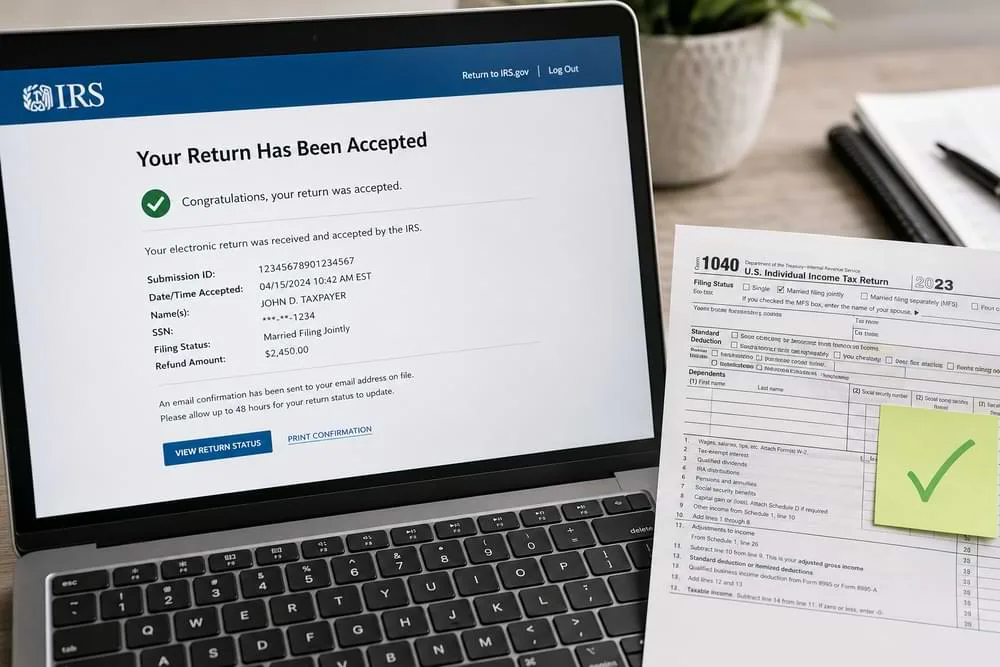
- Code 846 appears last, confirming your refund was issued with the date it was sent.
If you see codes 150, 806, 766, and 768 but no code 846, your return is still processing. If code 570 (additional account action pending) or code 971 (notice issued) also appears, the IRS has paused processing and may need additional information from you.
Codes That Signal a Problem
Not every transcript code is routine. Watch for these if they appear alongside codes 150, 806, 766, or 768:
- Code 570 (Additional Account Action Pending): The IRS placed a hold on your account for identity verification, income verification, or internal review. See our guide on IRS Code 570 refund hold explained for next steps.
- Code 971 (Notice Issued): The IRS sent you a letter. Check your mail. The notice explains what the IRS needs or what adjustment was made.
- Code 810 (Refund Freeze): Your refund is frozen entirely. This is more serious than a 570 hold and may require identity verification or a notice response before the freeze lifts.
If you received a CP504 notice alongside any of these codes, the situation may be escalating toward collections. Read our guide on what a CP504 notice means to understand your options and deadlines.
When to Get Professional Help?
Most transcript codes are routine. But certain situations call for a CPA who can pull your IRS transcript monitoring service records and interpret what the IRS is doing:
- Your refund has been pending for more than 60 days with no code 846
- You see code 570 or 810 and have not received a letter explaining why
- The code 806 amount does not match your W-2 or 1099 withholding totals
- You owe back taxes and your refund may be offset against prior-year balances
Frequently Asked Questions

Need help reading your IRS transcript?
If you see codes you do not recognize, your refund is delayed, or you received an IRS notice, start with the right guidance.
Join the Tax Resolution Lab for step-by-step IRS guidance, practical tools, and community support to help you understand your transcript, If you would rather have the codes watched for you, IRS transcript monitoring flags each new posting as it lands.
Or contact Ed Parsons, CPA, directly for a professional transcript review.