...

irs tax problem resolution

Comparison of resolving a federal tax lien on your own versus working with a tax professional

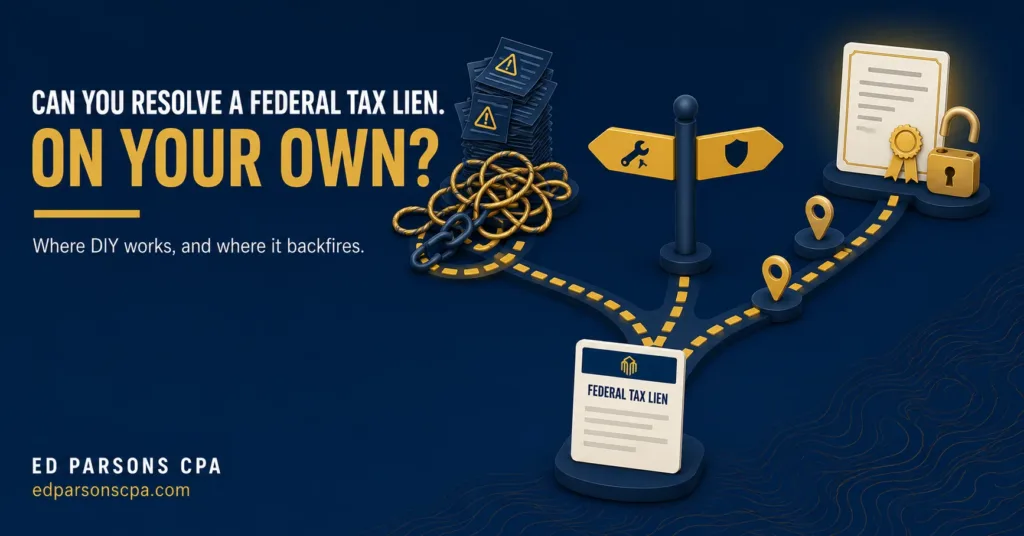
Can You Resolve a Federal Tax Lien on Your Own? DIY vs. Professional Help

Yes, some federal tax lien cases can be resolved without hiring a professional. If you owe under $25,000, all your returns are filed, and you are not facing a property sale, refinancing, or active levy, you may be able to handle the resolution yourself with the right guidance. Complex cases involving multiple tax years, business

Can You Resolve a Federal Tax Lien on Your Own? DIY vs. Professional Help Read More »

Before and after comparison of IRS lien filing thresholds under the Fresh Start Program

IRS Fresh Start Program and Federal Tax Liens: Do You Qualify?

The IRS Fresh Start Program changed federal tax lien rules in two significant ways. First, the IRS raised its lien filing threshold from $5,000 to $10,000, meaning taxpayers who owe less than $10,000 generally will not have a lien filed against them. Second, Fresh Start created a pathway for lien withdrawal (not just release) for taxpayers

IRS Fresh Start Program and Federal Tax Liens: Do You Qualify? Read More »

Federal tax lien folder in a bankruptcy courtroom hallway representing the intersection of IRS debt and bankruptcy proceedings

Federal Tax Lien and Bankruptcy: What Survives Chapter 7 and Chapter 13

Filing bankruptcy can eliminate your personal obligation to pay a tax debt. But the federal tax lien attached to your property is a separate legal claim, and it does not automatically disappear when the debt is discharged. In a Chapter 7 case, the lien remains on any property you owned at the time of filing.

Federal Tax Lien and Bankruptcy: What Survives Chapter 7 and Chapter 13 Read More »

Overhead view of IRS tax paperwork, lien folders, and brass desk clock on a wooden office desk with warm natural lighting.

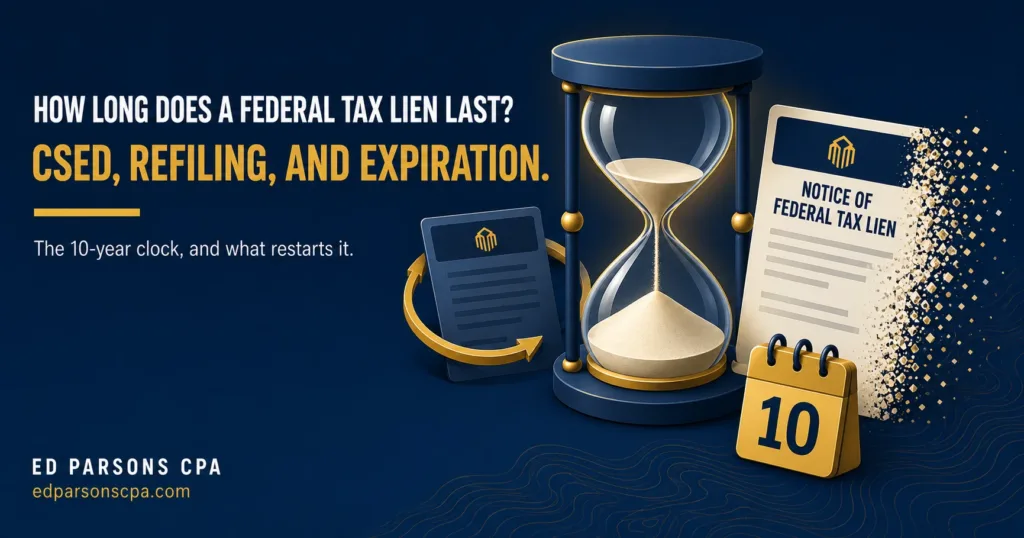
How Long Does a Federal Tax Lien Last? CSED, Refiling, and Expiration.

A federal tax lien generally lasts 10 years from the date the IRS assesses your tax liability, not from the tax year itself and not from the date you filed your return. This 10-year window is governed by the Collection Statute Expiration Date (CSED) under IRC Section 6502. However, the actual duration can be shorter

How Long Does a Federal Tax Lien Last? CSED, Refiling, and Expiration. Read More »

Real estate closing documents on a table representing a property sale with a federal tax lien

Federal Tax Lien Subordination and Discharge: Selling or Refinancing With a Lien

A federal tax lien subordination allows another creditor (typically a mortgage lender) to move ahead of the IRS in priority, making it possible to refinance. A federal tax lien discharge removes the lien from a specific piece of property, making it possible to sell with a clear title. These are two separate IRS mechanisms with

Federal Tax Lien Subordination and Discharge: Selling or Refinancing With a Lien Read More »

IRS Form 12277 Application for Withdrawal of Filed Form 668(Y) on a desk

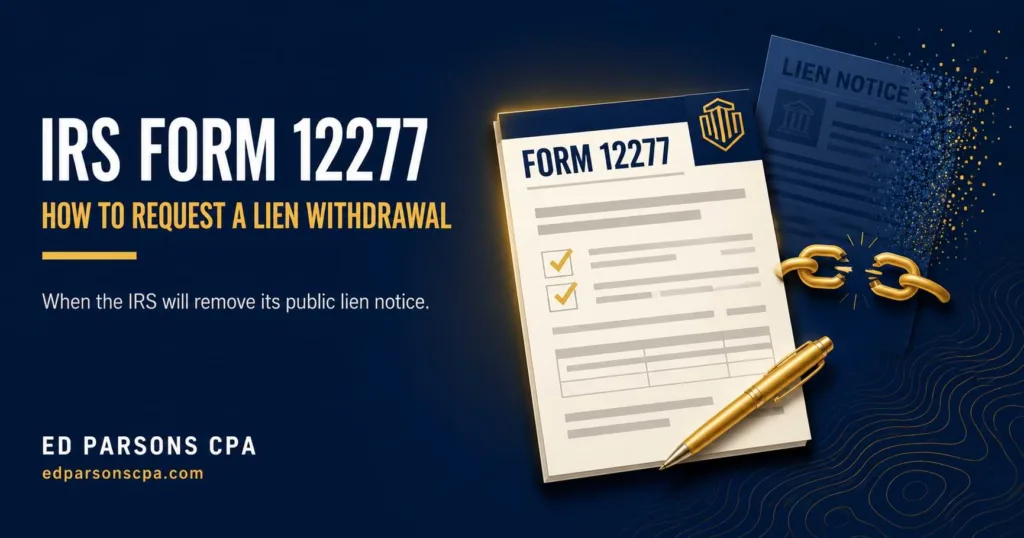
IRS Form 12277: How to Request a Federal Tax Lien Withdrawal

IRS Form 12277, officially titled “Application for Withdrawal of Filed Form 668(Y),” is the form you use to request that the IRS withdraw a Notice of Federal Tax Lien from public records. A withdrawal is different from a release. A withdrawal removes the lien filing entirely, as if it were never recorded, while a release

IRS Form 12277: How to Request a Federal Tax Lien Withdrawal Read More »

Person reviewing a credit report to check for federal tax lien impact

Does a Federal Tax Lien Affect Your Credit Score?

A federal tax lien no longer appears on your credit report. In April 2018, the three major credit bureaus (Equifax, Experian, and TransUnion) stopped including tax liens on consumer credit reports as part of a data accuracy initiative called the National Consumer Assistance Plan. This means a federal tax lien will not directly lower your

Does a Federal Tax Lien Affect Your Credit Score? Read More »

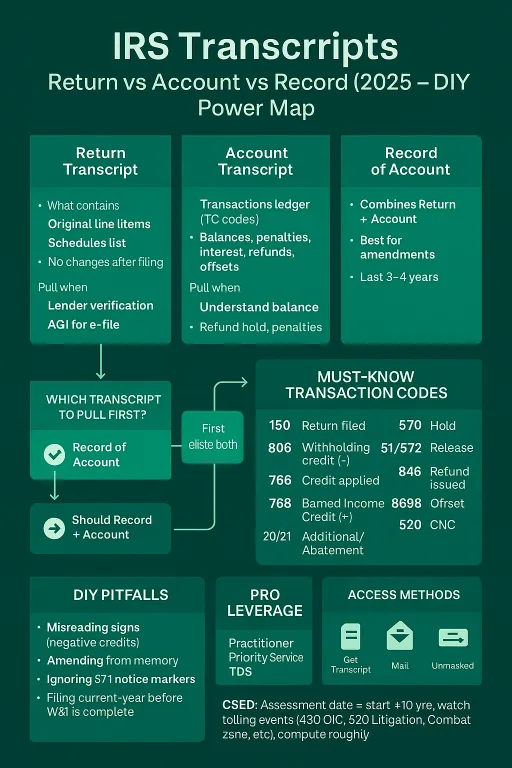
Infographic comparing IRS Return, Account, and Record of Account transcripts with key codes and DIY tips

The Definitive (Advanced) Guide to IRS Transcripts – 2025

Advanced DIY map to IRS transcripts: Return Transcript (original line items; no post-filing changes), Account Transcript (full transaction ledger—TCs, penalties, interest, refunds/offsets), and Record of Account (Return + Account, best for amendments). When to pull each, how to read codes (150, 806, 570, 846), and avoid reconciliation traps.

The Definitive (Advanced) Guide to IRS Transcripts – 2025 Read More »

Yes, I can Meet In
I am Available to Represent You in