Skip to content

Florida use tax is a 6% tax, plus your county’s discretionary surtax, on taxable goods you use, store, or consume in Florida when sales tax was not collected at the time of purchase. It applies most often to out-of-state and online purchases, equipment, and supplies. Businesses report and pay it on the same DR-15 return they use for sales tax, and unpaid use tax is one of the most common findings in a Florida sales tax audit.
Use tax is the quiet half of Florida’s “sales and use tax.” It exists so that a taxable item is taxed once, whether you bought it down the street or shipped it in from another state. Most business owners understand sales tax; far fewer ever pay use tax, and that gap is exactly what a Department of Revenue auditor looks for. For the full picture, start with our complete guide to Florida sales and use tax.
Florida Use Tax at a Glance
- The rate is 6%, plus your county’s discretionary surtax, the same as sales tax.
- It applies when taxable goods are used in Florida and no sales tax was collected at purchase.
- Businesses report it on the same DR-15 return used for sales tax.
- It is one of the most common findings in a Florida sales tax audit.
- Florida gives credit for sales tax already paid to another state.
- It is self-assessed, so the duty to calculate and pay it falls on the business.
What Is Florida Use Tax?
Use tax is the companion to sales tax, charged at the same rate and on the same kinds of items. The difference is who triggers it and when. Sales tax is collected by a seller at the point of sale; use tax applies when you acquire a taxable item and no Florida sales tax was charged. The purpose is fairness: it stops a Florida buyer from sidestepping tax by purchasing out of state, and it keeps in-state sellers from being undercut on price.
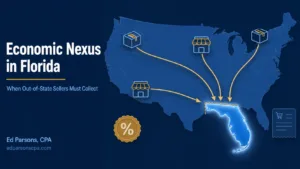
The most common reason that happens is a purchase from a seller with no obligation to collect Florida tax, such as an out-of-state vendor below the economic nexus threshold. The item is still taxable in Florida, so the responsibility to pay simply shifts from the seller to you, the buyer.
When Do You Owe Use Tax?
You generally owe Florida use tax in situations like these:
- Equipment, fixtures, or furniture bought from an out-of-state seller that did not charge Florida tax.
- Online or catalog purchases where the seller did not collect Florida tax at checkout.
- Supplies and materials brought into Florida from another state for use in your business.
- Items pulled from resale inventory and used in your own operations instead of being sold.
- Anything taxed by another state below 6%, where you owe Florida the difference.
Sales Tax vs. Use Tax
The two taxes are mirror images. This is the distinction in one view.
| Sales tax | Use tax | |
| Who charges it | The seller, at the point of sale | No one; you self-report it |
| Measurement (what triggers it) | A taxable sale made in Florida | Using an untaxed item in Florida |
| Rate | 6% plus county surtax | 6% plus county surtax |
| Where it is reported | Form DR-15 | Form DR-15, taxable-purchases line |
| Typical trigger | Selling goods to a customer | Buying equipment out of state |
How to Report and Pay Florida Use Tax
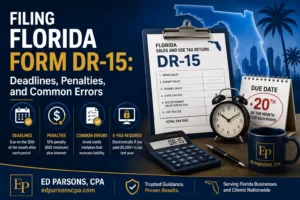
You do not file a separate use tax return. A registered business reports use tax on its Form DR-15, on the line for taxable purchases, and pays it along with any sales tax due. The rate is the same 6% plus your county surtax, based on where the item is used. There is no minimum threshold; even a single untaxed purchase creates a use tax obligation for that reporting period.
If you paid another state’s sales tax on the item at a rate of at least 6%, you generally owe no additional Florida tax. If you paid a lower rate, you owe Florida the difference. Businesses that are not yet registered as a dealer but owe use tax should expect this to come up as part of getting compliant.
Why Use Tax Is an Audit Magnet
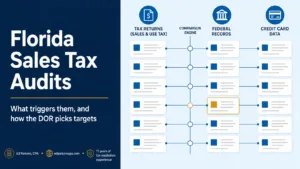
Use tax is under-reported more than almost any other line on a Florida return, which makes it a favorite of auditors. A common example is equipment a business buys without paying tax, then never self-reports. The auditor pulls purchase records, compares them to what was reported, and assesses the gap, often across several years at once. Because the tax looks trivial on any single invoice, the running total can be a real surprise once an auditor adds it all up.
Because there is no statute of limitations until returns are filed, unreported use tax can reach back well beyond the usual three years. If you suspect your business has accumulated unpaid use tax, a Business CPA Tax Resolution Case Analysis reviews how far the exposure runs and the options for resolving it while limiting penalties, which is far better than waiting for the Department to find it first.
Use tax is the one line the Department can rebuild without your cooperation. Your purchase invoices sit with the vendors, your card statements sit with the bank, and both are reachable in an audit whether or not the tax ever reached a return. It is also only one of the places this happens. I write a short email series on the other four: the economic nexus threshold that catches remote sellers, the resale and exemption certificates that leave the seller holding the bill, the signals that select a business for audit, and the disclosure window that closes the moment the Department makes contact. Send it to my email. Look for my confirmation email and click the link in it, and they start arriving one at a time. Unsubscribe whenever you like.
Questions Businesses Ask About Florida Use Tax
Common Use Tax Mistakes
- Assuming that if tax was not on the invoice, no tax is owed.
- Overlooking use tax on out-of-state equipment, fixtures, and furniture.
- Pulling items from resale inventory for business use without self-reporting use tax.
- Skipping use tax because the business had no taxable sales that period.
- Treating use tax as optional rather than a legal obligation the Department actively audits.
For official guidance, the Florida Department of Revenue’s sales and use tax pages and its sales and use tax brochure explain how use tax is reported, though neither replaces advice on your own situation.

Worried About Unpaid Florida Use Tax?
Years of unreported use tax on equipment and out-of-state purchases are a common and quietly growing exposure. Ed Parsons, CPA works with Florida businesses to assess that exposure and resolve it before the Department of Revenue does. Start with a Business CPA Tax Resolution Case Analysis, which explicitly covers sales and use tax exposure.