Skip to content
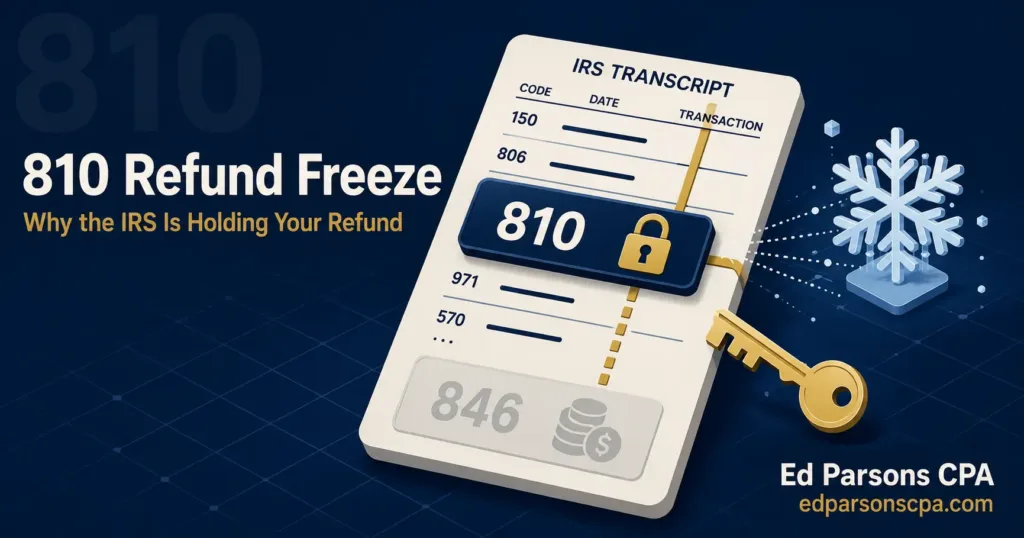
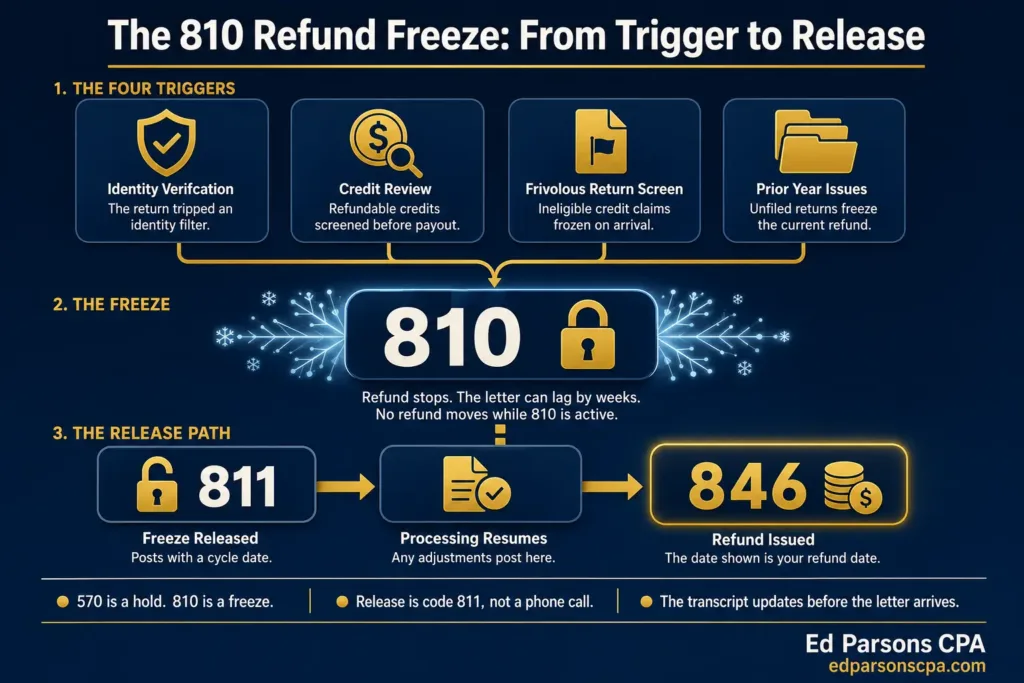
Code 810 on an IRS account transcript is a full refund freeze. The IRS has stopped your refund before release, most often for identity verification, refundable credit review, or a frivolous return screen. The freeze stays in place until code 811 posts. No refund moves while 810 is active.
An 810 is the code taxpayers fear most. It stops your refund completely, and the IRS often posts it with no letter and no explanation. This article covers what sits behind an 810, why the notice lags the freeze, and what the release looks like.
What an 810 Refund Freeze Actually Is?
Code 810 is a freeze condition on the refund side of your account. It does not adjust your return. It blocks the money from leaving.
The freeze is placed by a specific IRS function, and which function placed it determines how it resolves. The transcript will not tell you which one it was.
The Four Common Triggers Behind Code 810
- Identity verification. The return tripped an identity filter and the IRS wants you to verify before paying out.
- Refundable credit review. Earned income credit, child tax credit, fuel credits, and sick leave credits are heavily screened. The IRS freezes first and examines after.
- Frivolous return screening. Returns claiming credits the filer does not qualify for are routed to a special unit and frozen on arrival.
- Prior year compliance issues. Unfiled returns or unresolved account problems can freeze the current refund.
If you are not sure how to pull the transcript that shows these codes, start with our guide to understanding IRS account transcripts and how to read them. Transcripts are free through the IRS Get Transcript tool.
810 Freeze vs Normal 570 Hold: Know the Difference
The two hold codes behave very differently.
| Factor | Code 570 Hold | Code 810 Freeze |
| Severity | Routine review hold. Often resolves on its own. | Formal freeze set by a specific IRS unit. Rarely self-resolves. |
| Letter | Usually paired with a 971 notice within days. | Notice can lag by weeks or months. Some filers never receive one. |
| Typical cause | Income matching, math checks, small discrepancies. | Identity verification, credit exams, frivolous return screens. |
| Release code | 571 releases the hold. | 811 releases the freeze. |
| Measurement | Watch for 571 posting within one to three cycle weeks. | Watch for 811 with a cycle date. Until it posts, nothing moves. |
Why You Have an 810 and No Letter
The freeze posts the moment a filter fires. The letter is generated later, by a different system, and mailed in batches. That gap is structural.
The problem: some 810 freezes require action from you, and the clock does not start until you act. Waiting for a letter that runs weeks behind the freeze is how taxpayers lose entire filing seasons.
- “My transcript shows 810 but Where’s My Refund still says processing.” Normal. The freeze posts to the transcript first. The public tool lags behind.
- “I verified my identity and the 810 is still there.” Verification releases can take several cycle weeks to post as an 811. The freeze does not lift the same day.
- “My 810 has been there for months with no movement.” That usually means the IRS is waiting on something it never clearly asked for.
What the Release Actually Looks Like
An 810 does not fade away. Code 811 releases it, posting with a cycle date. After 811, the refund sequence resumes and code 846 posts with your refund date.
If the IRS adjusted your return during the freeze, the 811 arrives with adjustment codes and a smaller refund. The transcript shows the math before the letter does.
For how the credit codes read once your refund resumes, see our breakdown of transcript codes 150, 806, 766, and 768.
When to Stop Refreshing and Get the Account Read
The transcript tells you a freeze exists. It does not tell you which unit set it or whether a response from you would release it. That missing context is the entire game with an 810.
That is the gap the Personal IRS Transcript Monitoring Service closes. A CPA monitors your account activity, identifies what type of freeze you are under, and flags the moment the 811 posts or the moment action on your side would move it. If your freeze is identity related, the IRS identity verification service is where verification happens, but knowing whether that is your freeze type is the step most taxpayers cannot see on their own.