Skip to content

The IRS issues most refunds within 21 days, but that window is a target, not a promise. Refunds claiming the earned income credit or additional child tax credit are held by law under the PATH Act until mid-February. Beyond that, identity checks, wage matching, credit reviews, and offsets delay refunds silently, often with no letter.
Day 22 is when the searching starts. The return was accepted, the tracker says processing, and the 21 days everyone quotes have come and gone. Nothing on the screen explains why.
Here is the part the tracker never explains: 21 days was never a commitment, one entire category of refunds is held by statute no matter how early you file, and the reviews that catch everything else run silently. This guide sorts the delays that are normal from the ones that need attention.
The 21 Day Window Is Guidance, Not Law
The IRS states that most e-filed refunds issue within 21 days. Most is doing real work in that sentence. The window assumes a clean return, no credits under screening, no identity flags, and no debts attached to the account.
The official IRS refunds page carries the same caveat: some returns simply require additional review, and those get no guaranteed timeline at all.
The PATH Act Hold: The One Delay Written Into Law
If your return claims the earned income tax credit or the additional child tax credit, your refund is held by statute, not by suspicion. The PATH Act bars the IRS from releasing these refunds before mid-February, no matter how early you file.
- The hold applies to the entire refund, not just the credit portion.
- Filing in January does not beat the hold. It only means your return waits at the front of the line.
- After the statutory release, normal processing time still applies. Mid-February is when release becomes possible, not when deposits land.
The IRS publishes its own timing guidance for these credits on its EITC and ACTC refund timing page.
The Four Silent Reviews Behind Most Other Delays
Past the PATH Act, most delays trace to one of four automated screens. None of them announce themselves. The tracker shows the same still-processing message for all four.
| Review Type | What Triggers It | How It Shows on the Transcript |
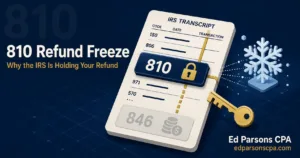
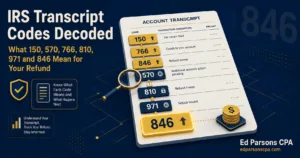
| Identity verification | The return trips an identity filter: new address, new bank account, filing pattern change. | Often an 810 freeze or a 971 notice code. A verification letter follows, sometimes weeks later. |
| Wage matching | Reported income does not match what employers and payers filed. | A 570 hold while the numbers are compared. Resolves alone if the mismatch clears. |
| Credit review | Refundable credits are screened before payout, valid claims included. | A 570 hold or 810 freeze, frequently paired with a notice code. |
| Offset conditions | Prior tax debt, defaulted student loans, child support arrears, or state debts attached to the account. | Offset codes post and the refund releases short, or not at all. |
| Measurement | Count days from the PATH release or from day 21, whichever applies to you. | A hold code past 30 days with no letter is the signal to get the account read. |
What Each Review Typically Costs You in Time
No review type carries a guaranteed clock, but they behave differently enough to set expectations.
- Wage matching is usually the shortest. If the mismatch clears on its own, the hold releases within a few cycle weeks without any action from you.
- Identity verification runs on your speed. The review is frozen until you verify, and the release posts several cycle weeks after you do. The letter delay is the expensive part.
- Credit reviews are the widest range. Some clear in weeks, others convert to document requests that run for months.
- Offsets are not really delays at all. The refund releases on schedule, minus the debt, or is absorbed entirely. The surprise is the amount, not the timing.
The Questions Taxpayers Actually Ask
- “It has been 30 days and the tracker still says processing.” Pull the transcript. A clean transcript at day 30 is a queue. A hold code at day 30 is a review.
- “I claimed the EITC and filed the first week of the season. Where is my refund?” Held by the PATH Act until mid-February regardless of filing date, then normal processing time on top.
- “My refund came but it was smaller.” An offset or an adjustment. The transcript shows which debt or correction took the difference before the explanation letter arrives.

Where the Answer Actually Lives
The refund tracker compresses all of the above into one message. Your account transcript does not. It shows which hold posted, when it posted, and whether a notice went out, days before any mail arrives.
If you have never pulled one, our guide to understanding IRS account transcripts and how to read them covers how to get it free, and our breakdown of transcript codes 150, 806, 766, and 768 covers the sequence a healthy refund follows.
When the transcript shows a hold you cannot explain, that is the moment to stop guessing. The Personal CPA Tax Resolution Case Analysis pulls the account, identifies which of the four reviews you are actually in, and maps what response, if any, will move it.
Common Mistakes at Day 22 and Beyond
- Refiling the return. A duplicate filing collides with the original and can freeze both.
- Calling the IRS in week four. Agents see the same status you do, and most reviews cannot be released by phone.
- Reading still processing as being audited. The message covers routine screens and serious holds alike. Only the transcript says which.
- Comparing timelines with other filers. A PATH Act return and a no-credit return were never on the same clock.
- Ignoring mail while waiting. One unanswered verification letter can quietly add months.
When a Delay Becomes a Case
A refund at day 25 with a PATH Act credit is on schedule. A refund at day 60 with a hold code, no letter, and no movement is not, and every additional week of waiting adds nothing but weeks.

At Ed Parsons CPA, IRS account work is the core of the practice. A case analysis replaces the still-processing message with the actual state of your account and the specific step that unlocks it, whether that is verification, documentation, or resolving the debt the refund is snagged on.