FBAR

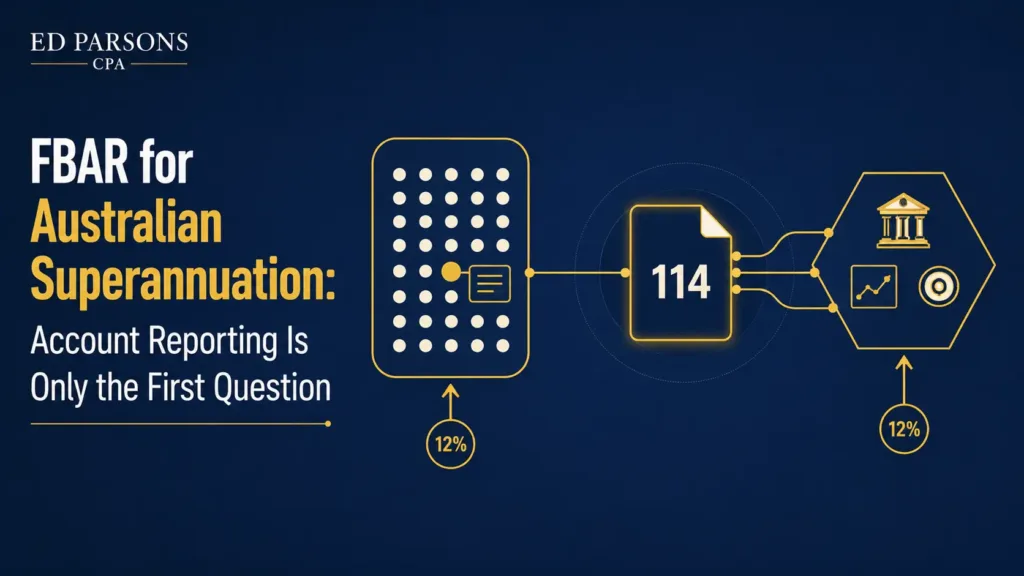
Editorial illustration comparing pooled and individual Australian superannuation fund structures with an FBAR Form 114 document to explain foreign account reporting considerations.

FBAR for Australian Superannuation: Account Reporting Is Only the First Question

Australian superannuation accounts are generally reportable on the FBAR once your foreign accounts combined exceed $10,000, and a working balance clears that alone. But the account report is only the first of five U.S. questions: FBAR, Form 8938, foreign trust reporting, PFIC exposure, and income tax. The answers differ by structure. A retail or industry […]

FBAR for Australian Superannuation: Account Reporting Is Only the First Question Read More »

FBAR and Foreign Pension Accounts: When Retirement Accounts Are Still Reportable

FBAR and Foreign Pension Accounts: When Retirement Accounts Are Still Reportable

Foreign pensions have no blanket FBAR answer. The retirement exceptions written into the rules cover U.S. IRAs and U.S. tax-qualified plans only, and the IRS examination manual treats foreign plans such as Canadian RRSPs and Mexican AFORES as normally reportable. What decides each plan is structure and control: whether a segregated account sits in your

FBAR and Foreign Pension Accounts: When Retirement Accounts Are Still Reportable Read More »

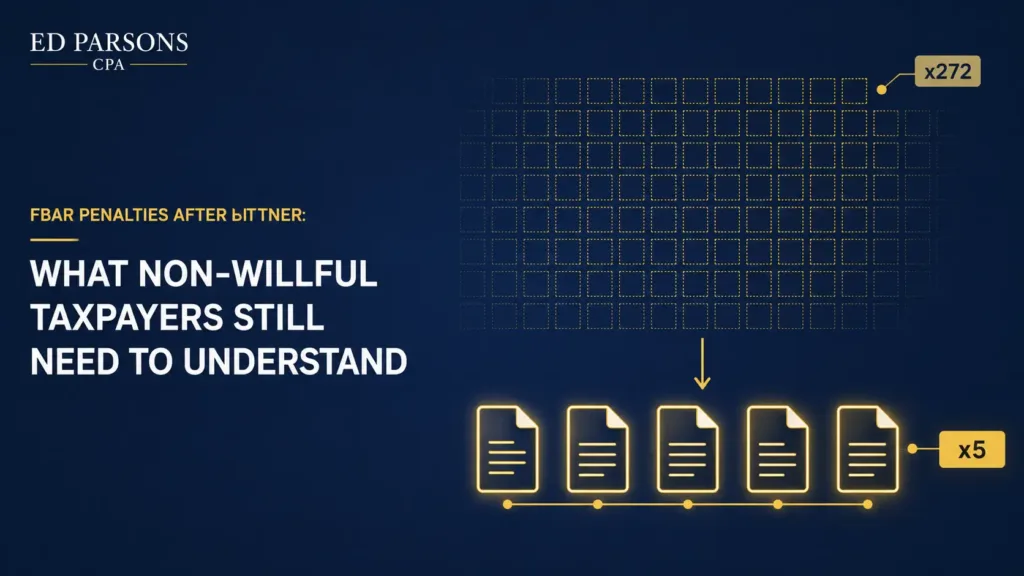
Editorial illustration showing FBAR penalty counting after the Bittner Supreme Court decision with a reduction from 272 potential penalties to five document icons for non-willful FBAR violations.

FBAR Penalties After Bittner: What Non-Willful Taxpayers Still Need To Understand

After Bittner v. United States, the non-willful FBAR penalty accrues per annual report, not per account: currently up to $16,536 for each missed year, inflation adjusted. Willful exposure was never touched: it remains the greater of $165,353 or 50% of each account’s balance, per year. The decision changed the arithmetic of honest mistakes. It changed

FBAR Penalties After Bittner: What Non-Willful Taxpayers Still Need To Understand Read More »

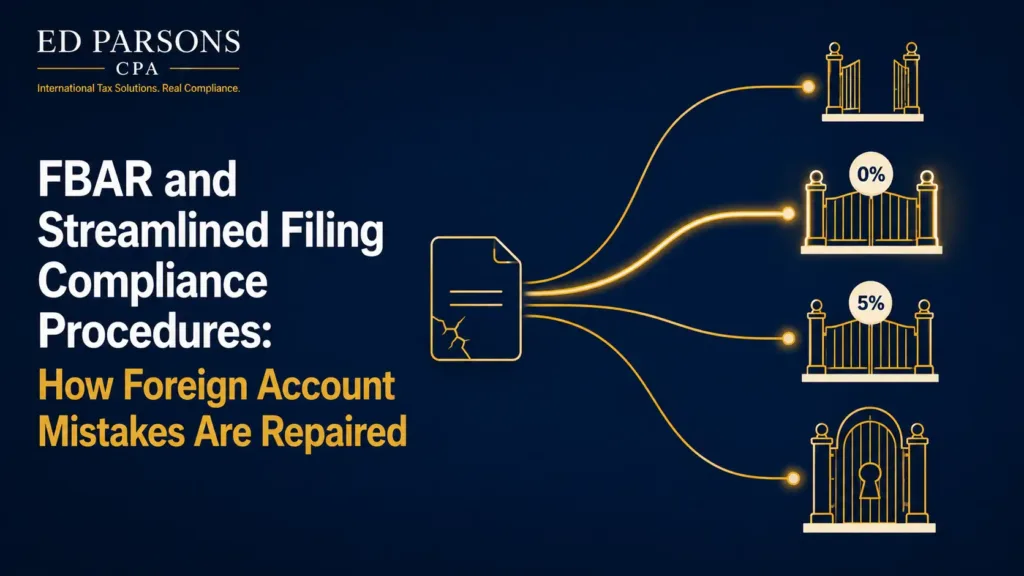
FBAR and Streamlined Filing Compliance Procedures: How Foreign Account Mistakes Are Repaired

FBAR and Streamlined Filing Compliance Procedures: How Foreign Account Mistakes Are Repaired

The streamlined filing compliance procedures are a coordinated correction: three years of amended returns, six years of FBARs, and a non-willfulness certification signed under penalty of perjury. They are not an upload window for late FBARs.Which lane fits, delinquent FBAR submission, streamlined foreign, streamlined domestic, or voluntary disclosure, depends on your income reporting, your residency,

FBAR and Streamlined Filing Compliance Procedures: How Foreign Account Mistakes Are Repaired Read More »

I Reported the Foreign Income But Never Filed FBARs: Is That Non-Willful?

I Reported the Foreign Income But Never Filed FBARs: Is That Non-Willful?

Reporting your foreign income helps, but it does not make a missed FBAR non-willful by itself. Willfulness turns on the complete record: what Schedule B said, what you signed, how the accounts were used, and what happened after you learned the rule. For taxpayers who reported everything and simply never filed FinCEN Form 114, a

I Reported the Foreign Income But Never Filed FBARs: Is That Non-Willful? Read More »

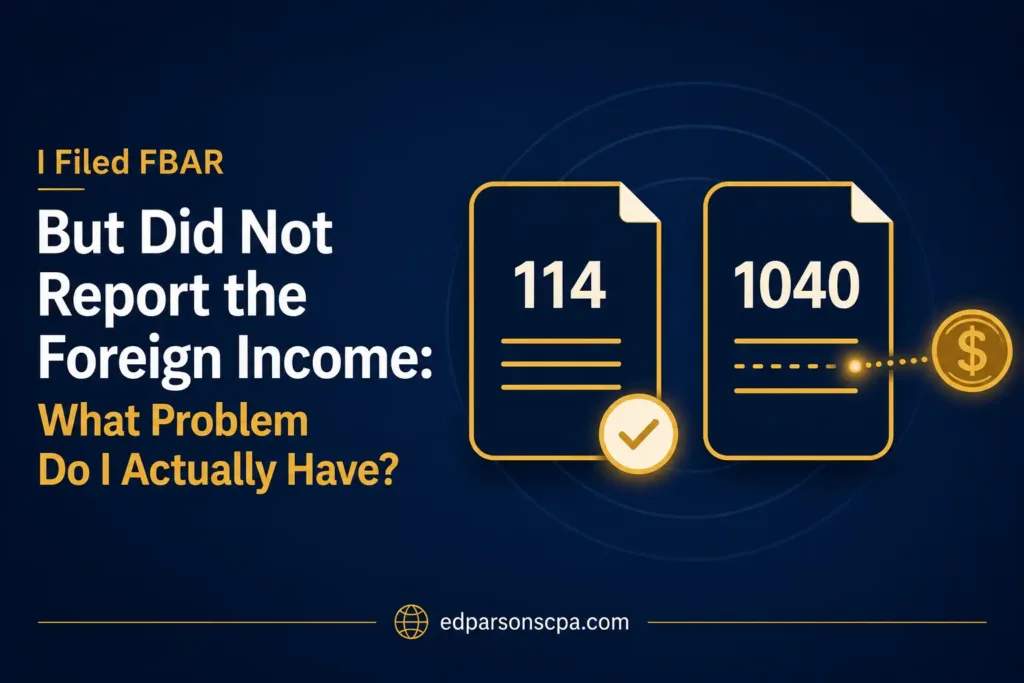
I Filed FBAR But Did Not Report the Foreign Income: What Problem Do I Actually Have?

I Filed FBAR But Did Not Report the Foreign Income: What Problem Do I Actually Have?

A complete and accurate FBAR stays valid even when foreign income was left off your tax return. The FBAR has no income lines: it discloses accounts, not earnings. Unreported interest, dividends, gains, fund income, or pension distributions are a Form 1040 problem. Fixing them can also pull Form 8938, Form 8621, and your streamlined eligibility

I Filed FBAR But Did Not Report the Foreign Income: What Problem Do I Actually Have? Read More »

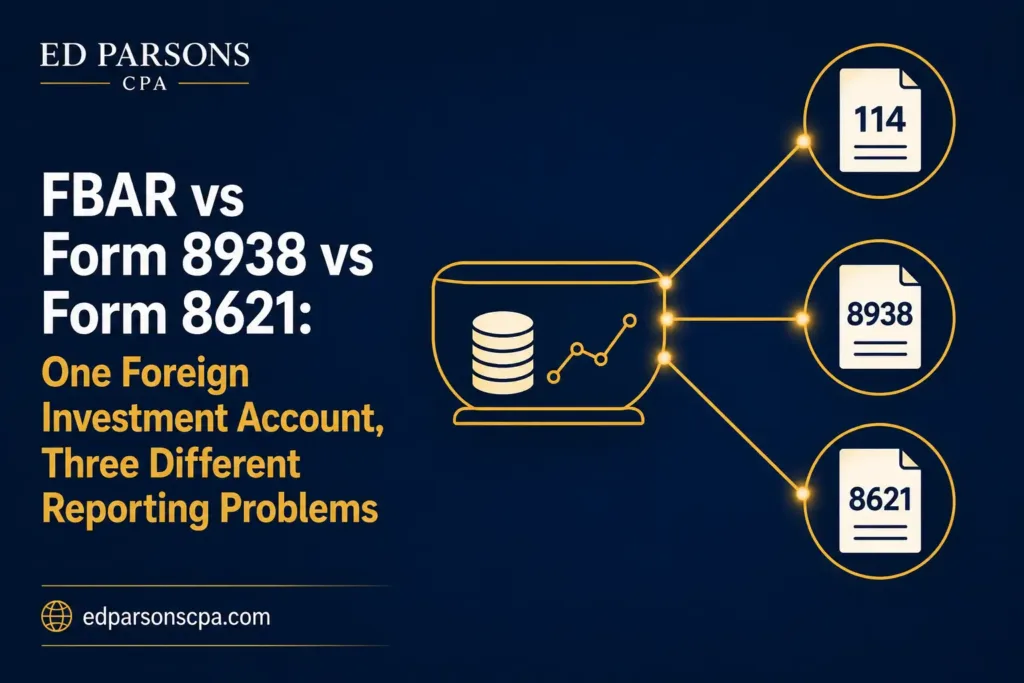
FBAR vs Form 8938 vs Form 8621: One Foreign Investment Account, Three Reporting Requirements

FBAR vs Form 8938 vs Form 8621: One Foreign Investment Account, Three Different Reporting Problems

One foreign investment account can trigger three separate U.S. reports. The FBAR (FinCEN Form 114) discloses the account itself once all foreign accounts exceed $10,000 combined at any point in the year. Form 8938 discloses specified foreign financial assets on your tax return at thresholds starting at $50,000. Form 8621 reports and taxes each PFIC

FBAR vs Form 8938 vs Form 8621: One Foreign Investment Account, Three Different Reporting Problems Read More »

FBAR Reporting for Foreign Mutual Funds and PFICs | Form 114 & Form 8621 Guide

FBAR and PFICs: If I Own Foreign Mutual Funds or ETFs, What Goes on the FBAR?

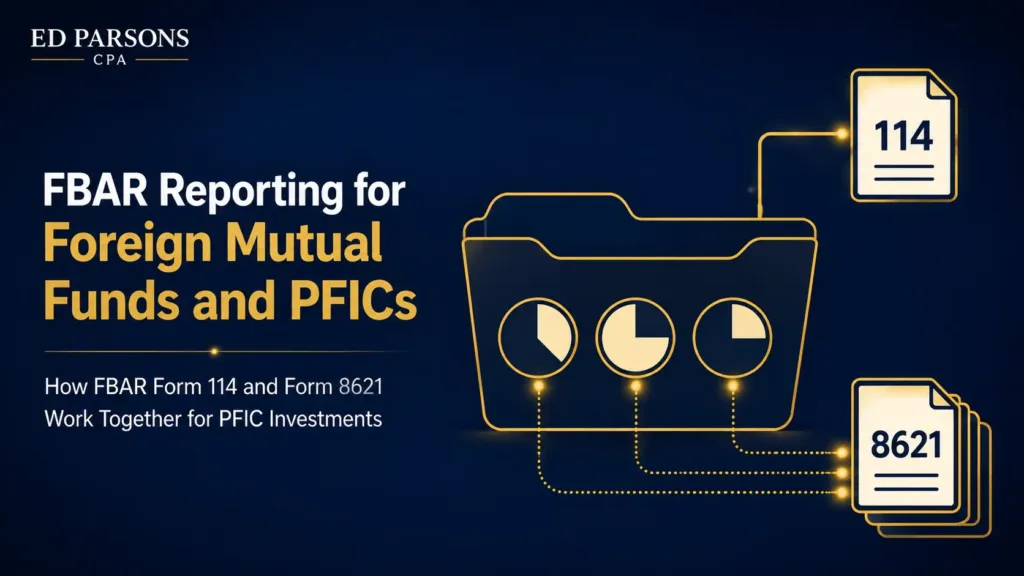
A foreign brokerage or investment account generally belongs on the FBAR at its highest value for the year. The foreign mutual funds and ETFs inside that account are usually PFICs, which the IRS taxes and tracks separately on Form 8621, fund by fund. The FBAR reports the account. Form 8621 reports the fund. Filing one

FBAR and PFICs: If I Own Foreign Mutual Funds or ETFs, What Goes on the FBAR? Read More »

FBAR Rules for Complicated Foreign Accounts: PFICs, Pensions, Entities, Trusts, Crypto & Offshore Investments

FBAR Rules for Complicated Foreign Accounts: PFICs, Pensions, Entities, Trusts, Crypto, and Offshore Investments

The FBAR (FinCEN Form 114) is a Bank Secrecy Act report filed with FinCEN, not an IRS tax form. You must file it when the combined maximum value of all your foreign financial accounts exceeds $10,000 at any time during the year. The rule reaches accounts you own and accounts you can control, including foreign

FBAR Rules for Complicated Foreign Accounts: PFICs, Pensions, Entities, Trusts, Crypto, and Offshore Investments Read More »

Yes, I can Meet In
I am Available to Represent You in