Skip to content

Streamlined Filing Advantages for Taxpayers With Complex Returns

Streamlined Filing Advantages for Taxpayers With Complex Returns: How to Minimize Penalties and Ensure Compliance
By Edward Parsons, CPA, Edward Parsons, CPA
Taxpayers who face the challenges of complex returns often find themselves navigating a complicated web of compliance requirements and potential penalties. Streamlined filing procedures, introduced by the IRS, offer an effective means for such taxpayers to align with tax regulations while minimizing the stress associated with compliance. This article delves into the advantages of these streamlined filing options, including how they function, who qualifies, and the key benefits they provide. The fundamental aim is to equip readers with insights that can help mitigate penalties and enhance compliance in the realm of international tax obligations.
The following sections will outline essential topics such as the streamlined filing compliance procedures, the potential to reduce penalties through the IRS disclosure process, eligibility requirements, and the implications of FBAR and FATCA reporting on taxpayers. By understanding these concepts, individuals can take informed steps towards securing their financial responsibilities while under the guidance of seasoned professionals.
What Are Streamlined Filing Compliance Procedures and How Do They Benefit Complex Taxpayers?
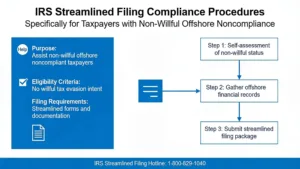
Streamlined filing compliance procedures are IRS initiatives aimed at helping taxpayers with complex returns to remedy prior non-compliance issues without facing severe penalties. These procedures simplify the process of filing past tax returns, especially in cases where taxpayers might have missed deadlines or neglected reporting income from foreign accounts. The core benefit of these streamlined procedures lies in the substantial reduction of penalties for taxpayers who demonstrate a non-willful failure to report.
For complex taxpayers, streamlining allows for a more manageable means of reconciling past issues with international tax filings. This initiative encourages compliance, reducing the anxiety associated with potential audits and penalties. As such, many choose to engage with professionals like Ed Parsons, CPA, who specialize in navigating the intricacies of international taxation and compliance, ensuring that all possible deductions and reliefs are maximized. For those facing potential complications, understanding FBAR penalty streamlined filing can offer significant relief.
How Does the Streamlined IRS Disclosure Process Reduce Penalties?

The streamlined IRS disclosure process is integral to minimizing penalties for taxpayers who qualify. By allowing eligible individuals to report previously undeclared income and accounts, this process enhances the chance of receiving reduced penalties. Specifically, taxpayers can gain from a penalty structure that often results in only a minimal percentage of the outstanding tax owed.
Eligibility requirements for this process emphasize the need for a genuine non-willful failure to comply with tax obligations. Through the streamlined process, individuals can file amended returns alongside disclosures of foreign financial accounts, greatly reducing the complexities often associated with international tax requirements. Taxpayers are encouraged to consult with seasoned professionals to ensure they meet all necessary criteria and leverage their knowledge to avoid common pitfalls.
Who Is Eligible for Streamlined Filing and What Are the Key Requirements?
Eligibility for streamlined filing is mainly determined by a taxpayer’s failure to comply with their reporting obligations due to non-willful reasons. Key requirements include demonstrating the following:
- Non-Willfulness: Taxpayers must affirm that their failure to report was not intentional.
- Filing Background: Individuals must submit the last three years of their tax returns and the last six years of FBARs if they were required to file.
- Disclosure: Comprehensive disclosure of all prior non-compliant conduct is necessary to initiate the streamlined process.
Taxpayers should prepare necessary documentation ahead of engaging with the IRS, as this ensures a smoother transition into compliance. Professional guidance, specifically from specialized firms like Ed Parsons, CPA, can significantly aid in accurately compiling these documents.
How Do FBAR and FATCA Reporting Affect Taxpayers With Complex Returns?
FBAR (Foreign Bank Account Report) and FATCA (Foreign Account Tax Compliance Act) play pivotal roles in the compliance landscape for taxpayers with foreign assets. Understanding these requirements is crucial as they directly impact tax filings and potential penalties.
FBAR mandates U.S. taxpayers with foreign bank accounts exceeding $10,000 in aggregated value to report these accounts annually. Failure to do so can lead to significant penalties, emphasizing the importance of timely and accurate reporting. Similarly, FATCA requires individuals with foreign assets over $50,000 (for single filers) or $100,000 (for married filing jointly) to report them to the IRS.
What Are FBAR Delinquent Filing Benefits and Reporting Deadlines?

In situations of FBAR delinquency, taking immediate action can yield benefits such as reduced penalties through streamlined procedures. Taxpayers who act within deadlines can often avoid the maximum penalties and impacts associated with non-compliance. Meeting the established reporting deadline of April 15, with a possible extension until October 15, is crucial for capturing the benefits of these tax compliance measures.
Timely filings and consultations can facilitate relationships with tax authorities and lessen stress in tax matters, helping taxpayers maintain peace of mind regarding their international financial obligations.
What FATCA Compliance Relief Options Exist for Offshore Account Holders?
FATCA compliance relief options allow taxpayers to conform with U.S. reporting requirements while minimizing potential repercussions. Key relief methods include:
- Streamlined Filing: This option allows taxpayers to file previous returns without facing harsh penalties if they show non-willfulness.
- Tax Treaties: Utilizing applicable tax treaties can reduce reporting burdens and streamline compliance steps.
- Voluntary Disclosure Programs: Engaging with IRS programs can assist taxpayers to correct disclosures while avoiding severe penalties.
By understanding these avenues, offshore account holders can more effectively organize their compliance strategies, decreasing the risks of non-compliance and penalties.
What Risks Arise From Ignoring Delinquent International Tax Filings?
Ignoring delinquent international tax filings can expose taxpayers to significant risks including hefty penalties and increased IRS scrutiny. The potential repercussions for non-compliance can escalate, leading to a loss of tax benefits and credits which further complicates financial management.
A further risk involves becoming a target of audits, enhancing the likelihood of facing penalties that can be both significant and financially debilitating. Taxpayers should remain proactive in addressing any back filings or delinquent statuses to preserve their financial standing.
Which IRS Penalties and Enforcement Actions Impact Offshore Voluntary Disclosure?
IRS penalties for non-compliance can be severe and vary in severity based on the nature of the offense. Key penalties that taxpayers may face include:
- FBAR Penalties: Non-filings can result in penalties of up to $10,000 for non-willful violations and potentially greater penalties for willful violations.
- Return Penalties: Failure to file returns can incur fines upwards of 5% of the taxes owed per month, further adding to the financial burden.
- Criminal Prosecution: In extreme cases, non-compliance may lead to criminal charges, emphasizing the importance of correct reporting and guidance from professionals.
Mitigation strategies are essential for taxpayers to avoid such situations, highlighting the benefit of engaging seasoned consultants.
How Do Liens, Levies, and Penalty Escalations Affect Taxpayers?
Liens and levies are enforcement actions that the IRS may utilize to collect back taxes owed. A lien, in essence, is a legal claim against a taxpayer’s property to secure payment. When established, it can severely impact credit ratings and financial opportunities. For more information on tax liens, consult with what is a federal tax lien.
Levies take this a step further by allowing the IRS to directly seize assets, such as bank accounts and wages, to satisfy outstanding debts. Taxpayers facing these strains often find timely intervention and negotiation critical in managing the fallout of tax dues. For those who have received a CP504 notice, the IRS may levy your bank account, and it’s crucial to act swiftly. Understanding the 30-day deadline before the IRS levies your bank account is vital.
Furthermore, specific IRS notices like the LT11 letter, also known as Letter 1058, serve as a final notice of intent to levy. These notices are critical, and understanding the CDP process and forming, how to get a levy release after receiving such a notice, is essential for taxpayers.
Professional representation can minimize these outcomes and preserve taxpayers’ interests.
Why Is Professional Judgment Critical in Handling Complex Streamlined Filings?
With the intricacies involved in streamlined filing processes, professional judgment is invaluable. Specialists, such as Ed Parsons, CPA, bring extensive experience and knowledge that can prevent costly mistakes and expedite compliance.
By employing a professional’s insight, taxpayers can navigate eligibility criteria, document preparation, and submission timelines effectively. This support is instrumental in enhancing overall compliance and minimizing risks associated with international taxation.
How Do Seasoned Advisors Support IRS Offshore Voluntary Disclosure Procedures?
Experienced advisors play a crucial role in aiding taxpayers through IRS offshore voluntary disclosure procedures. They can offer specialized services including:
- Eligibility Assessments: Evaluating each taxpayer’s qualification for streamlined procedures.
- Documentation Support: Assisting in collecting and preparing necessary documentation for submissions.
- Negotiation Representation: Acting on behalf of clients during discussions of penalties or filing discrepancies.
These vital roles ensure that taxpayers can confidently address their compliance issues while potentially reducing penalties.
What Role Does Representation Play in Negotiating Penalties and Preventing Levies?
Having representation is essential for navigating the complexities associated with tax disputes and negotiations. Professionals understand the intricacies of tax laws and can negotiate with the IRS on behalf of their clients, significantly enhancing the chances of favorable outcomes.
By leveraging their expertise, taxpayers can focus on their financial obligations rather than the minutiae of regulations, ensuring they stay compliant while addressing previous missteps with confidence.
What Consultation and Compliance Review Services Optimize Streamlined Filing Success?
Consultation and compliance review services provide a structured approach to ensure effective streamlined filing. Some of the services include:
- Consultation Services: Personalized tax strategy sessions to assess compliance needs.
- Compliance Reviews: Comprehensive assessments to identify areas for improvement in reporting.
- Ongoing Support: Continuous advisory services to assist with future filings and compliance.
Engaging such services facilitates thorough understanding and adherence to tax obligations, thus optimizing the chances of success in streamlined filing applications.
How Does a Compliance Review Identify and Mitigate International Tax Risks?
Conducting compliance reviews helps to pinpoint existing gaps in tax reporting and can highlight international taxation risks. These reviews typically involve:
- Document Analysis: Examining previous filings for discrepancies.
- Risk Assessment: Evaluating the exposure posed by current compliance statuses.
- Recommendations: Offering actionable suggestions to mitigate identified risks.
By being proactive about these risks, taxpayers can establish a more secure tax standing, avoiding penalties and achieving smoother compliance processes.
What Are the Steps to Engage Professional Consultation for Complex Tax Cases?
- Preparation: Gather all relevant documentation and past filings for review.
- Research: Identify potential consultants and specialists experienced in international tax compliance.
- Initial Consultation: Schedule a meeting to discuss specific needs and expectations.
Taking these steps ensures that taxpayers are well-prepared to enter discussions, making it easier to form productive engagements.