...

IRS Audit help

Ed Parsons CPA explaining foreign trust Form 3520-A penalties and streamlined filing options to help reduce IRS penalties for unfiled foreign trust forms

Form 3520-A Not Filed? The IRS Can Penalize 5% of Your Foreign Trust Value Every Year. Streamlined Filing May Help Avoid It.

If you are the U.S. owner of a foreign trust and Form 3520-A was never filed, the IRS penalty is 5% of the trust’s gross asset value at year-end. That responsibility falls on you personally, even if the foreign trustee was supposed to file. For a $400,000 trust, that is $20,000 per missed year. The

Form 3520-A Not Filed? The IRS Can Penalize 5% of Your Foreign Trust Value Every Year. Streamlined Filing May Help Avoid It. Read More »

Retrieve Your IRS Identity Protection PIN

How to Retrieve Your IRS Identity Protection PIN (IP PIN)?

To retrieve your IRS IP PIN, log in to your IRS Online Account at IRS.gov and check your Profile page. If you cannot access your account, call 800-908-4490 to have your IP PIN reissued. You can also file Form 15227 if your income is below $84,000 (individual) or visit a Taxpayer Assistance Center in person

How to Retrieve Your IRS Identity Protection PIN (IP PIN)? Read More »

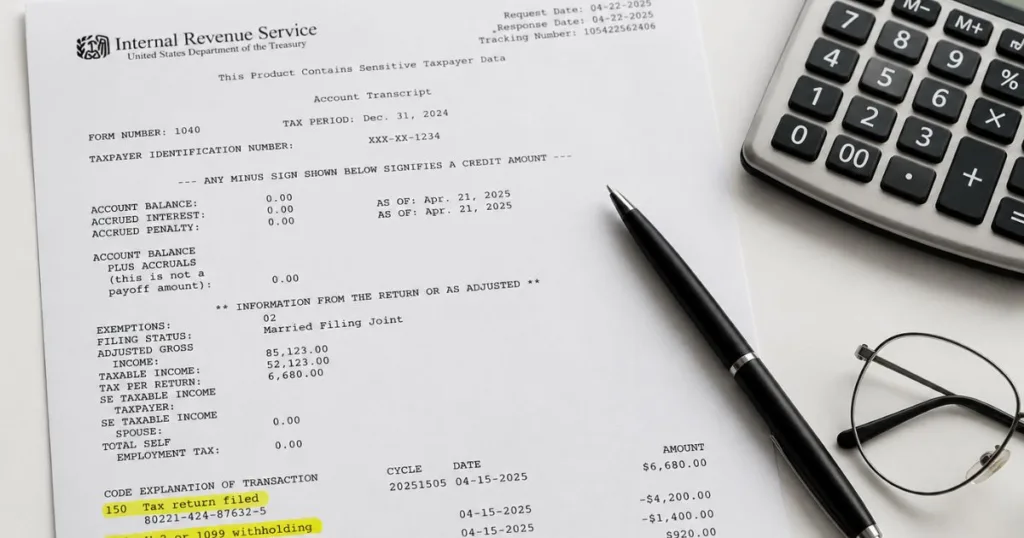
IRS account transcript with highlighted transaction codes 150 806 766 and 768 on a desk with calculator

What Do IRS Transcript Codes 150, 806, 766, and 768 Mean?

IRS transcript codes 150, 806, 766, and 768 are transaction codes on your IRS account transcript. Code 150 means your tax return was filed and your tax liability has been assessed. Code 806 shows your total withholding credits from W-2s and 1099s. Code 766 represents a tax credit applied to your account, such as the

What Do IRS Transcript Codes 150, 806, 766, and 768 Mean? Read More »

Attorney standing in front of the Miami Brickell skyline with a moving truck and IRS theme representing tax residency and relocation audit risks.

Moved to Miami From a High-Tax State? Here’s Why the IRS May Still Be Watching

What triggers an IRS audit after moving to Miami? Relocating from a high-tax state like New York, California, or New Jersey to Miami can trigger both state departure audits and federal IRS scrutiny. Common triggers include dual-state filing errors, unreported income from partnerships or rental properties left behind, mismatched domicile documentation, and large income shifts

Moved to Miami From a High-Tax State? Here’s Why the IRS May Still Be Watching Read More »

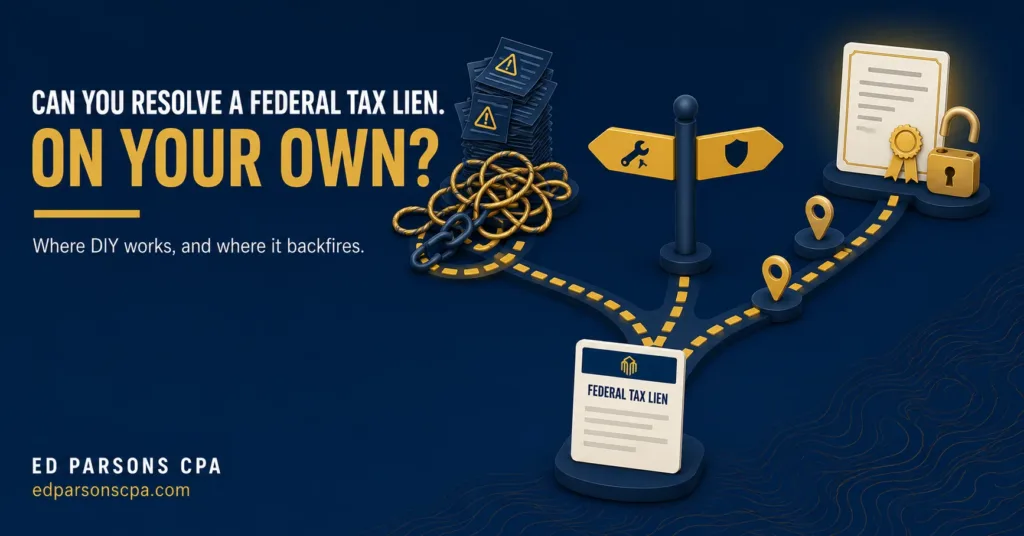
Comparison of resolving a federal tax lien on your own versus working with a tax professional

Can You Resolve a Federal Tax Lien on Your Own? DIY vs. Professional Help

Yes, some federal tax lien cases can be resolved without hiring a professional. If you owe under $25,000, all your returns are filed, and you are not facing a property sale, refinancing, or active levy, you may be able to handle the resolution yourself with the right guidance. Complex cases involving multiple tax years, business

Can You Resolve a Federal Tax Lien on Your Own? DIY vs. Professional Help Read More »

Side-by-side comparison of a tax attorney desk and a CPA desk for IRS lien resolution

Tax Lien Attorney vs. CPA: Who Should Handle Your IRS Lien Case?

Both tax attorneys and CPAs can represent you before the IRS for a federal tax lien case. The right choice depends on the nature of your case. Tax attorneys are essential for Tax Court litigation, criminal tax exposure, and complex legal disputes. CPAs are typically the better fit for resolution-focused cases that involve financial analysis,

Tax Lien Attorney vs. CPA: Who Should Handle Your IRS Lien Case? Read More »

Before and after comparison of IRS lien filing thresholds under the Fresh Start Program

IRS Fresh Start Program and Federal Tax Liens: Do You Qualify?

The IRS Fresh Start Program changed federal tax lien rules in two significant ways. First, the IRS raised its lien filing threshold from $5,000 to $10,000, meaning taxpayers who owe less than $10,000 generally will not have a lien filed against them. Second, Fresh Start created a pathway for lien withdrawal (not just release) for taxpayers

IRS Fresh Start Program and Federal Tax Liens: Do You Qualify? Read More »

Federal tax lien folder in a bankruptcy courtroom hallway representing the intersection of IRS debt and bankruptcy proceedings

Federal Tax Lien and Bankruptcy: What Survives Chapter 7 and Chapter 13

Filing bankruptcy can eliminate your personal obligation to pay a tax debt. But the federal tax lien attached to your property is a separate legal claim, and it does not automatically disappear when the debt is discharged. In a Chapter 7 case, the lien remains on any property you owned at the time of filing.

Federal Tax Lien and Bankruptcy: What Survives Chapter 7 and Chapter 13 Read More »

Overhead view of IRS tax paperwork, lien folders, and brass desk clock on a wooden office desk with warm natural lighting.

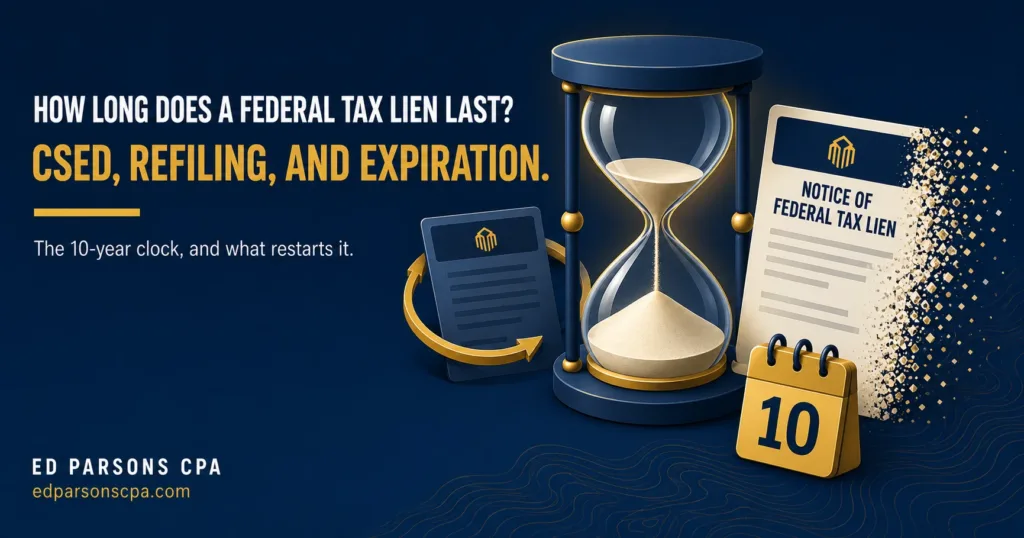
How Long Does a Federal Tax Lien Last? CSED, Refiling, and Expiration.

A federal tax lien generally lasts 10 years from the date the IRS assesses your tax liability, not from the tax year itself and not from the date you filed your return. This 10-year window is governed by the Collection Statute Expiration Date (CSED) under IRC Section 6502. However, the actual duration can be shorter

How Long Does a Federal Tax Lien Last? CSED, Refiling, and Expiration. Read More »

Real estate closing documents on a table representing a property sale with a federal tax lien

Federal Tax Lien Subordination and Discharge: Selling or Refinancing With a Lien

A federal tax lien subordination allows another creditor (typically a mortgage lender) to move ahead of the IRS in priority, making it possible to refinance. A federal tax lien discharge removes the lien from a specific piece of property, making it possible to sell with a clear title. These are two separate IRS mechanisms with

Federal Tax Lien Subordination and Discharge: Selling or Refinancing With a Lien Read More »

Yes, I can Meet In
I am Available to Represent You in