Skip to content

Filed FBAR But Not Reported Income: How to Correct Unreported Foreign Income

How to Correct Unreported Foreign Income After Filing FBAR: Penalties, Compliance, and IRS Guidance
By Edward Parsons, CPA, Edward Parsons, CPA
Failing to report foreign income accurately poses significant risks for U.S. taxpayers. With the complexities of the Foreign Bank Account Reporting (FBAR) requirements, many individuals unknowingly overlook vital income, leading to costly penalties and compliance challenges. This article aims to illuminate the numerous strategies for correcting unreported foreign income after FBAR filing. Readers will gain an understanding of the necessary steps to mitigate risks and ensure compliance with IRS regulations effectively.
Addressing unreported foreign income is crucial to maintaining good standing with the IRS and avoiding steep penalties. We will explore essential topics such as the distinction between FBAR filings and tax returns, the amendment process for tax filings, and the benefits of utilizing streamlined filing procedures. Additionally, we will discuss the significance of documenting good faith efforts, consulting tax professionals, and acting promptly to resolve any issues.
Determine the Nature of the Issue
Understanding the specific nature of unreported income is the first step toward resolution. Taxpayers must distinguish between unreported income and missed reporting obligations to rectify issues with foreign income properly. Misclassifying income can lead to adverse consequences, emphasizing the importance of clarity regarding the type of income and related forms that may have been overlooked.
Identifying possible missing information is vital. Taxpayers should consider the nature of their foreign income, including wages, dividends, or interest from foreign financial accounts, ensuring compliance with IRS requirements and the FBAR.
Understand FBAR and Tax Return Distinction
The FBAR (FinCEN Report 114) is distinct from the federal tax return in purpose and scope. While the FBAR primarily focuses on foreign financial accounts and their aggregate value, the tax return encompasses all income earned worldwide.
A prevalent misunderstanding is that filing an FBAR absolves a taxpayer from reporting the foreign income on their tax return. It is crucial to recognize that both documents serve different requirements, and failing to file one or the other can lead to penalties. For that reason, understanding the implications of these contexts is essential for ensuring proper compliance.
Amend Your Tax Return

To correct previously unreported foreign income, taxpayers must file an amended tax return using Form 1040-X. This form is specifically designed for correcting errors on previously filed returns and must accurately reflect all income, deductions, and credits.
Failure to amend tax returns may lead to rigorous audits and severe penalties. Accurately reporting income, including foreign earnings, is imperative to maintain compliance with IRS standards. The need for precision in this process cannot be overstated, as any discrepancies may further complicate a taxpayer’s situation.
Steps to File a Form 1040-X
- Gather Documentation: Collect all relevant tax documents and information regarding the missed income.
- Complete Form 1040-X: Ensure accuracy in reporting the corrections made.
- Submit to the IRS: Send the amended return to the appropriate IRS office.
Taking these decisive steps ensures taxpayers correct their filings and enhances their compliance status.
Consider Streamlined Filing Procedures
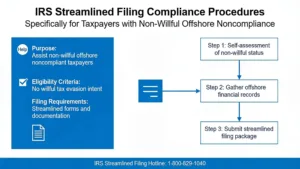
The IRS Streamlined Filing Compliance Procedures offer an alternative approach for taxpayers who have unintentionally failed to report foreign income. These procedures are designed for individuals who qualify under specific criteria, primarily focusing on non-willful violations.
Eligible taxpayers can benefit from reduced penalties or potentially exempt themselves from penalties altogether while rectifying omissions. By submitting amended tax returns and pertinent documentation through these streamlined procedures, individuals can navigate tax compliance more effectively.
Eligibility for Streamlined Procedures
To qualify for the streamlined procedures, taxpayers must meet several criteria:
- Non-Willful Behavior: The failure to report income must be due to a mistake or lack of knowledge, not intentional wrongdoing.
- Valid Tax Filings: Taxpayers must be compliant with previous tax filings and FBAR submissions.
Understanding the eligibility requirements for these procedures can significantly ease the burden of correcting foreign income reporting mistakes.
The IRS, including through its streamlined procedures, has a rigorous approach to assessing taxpayer compliance, as evidenced by the need for substantial scrutiny even for non-willful errors.
IRS Streamlined Procedures for Foreign Asset Disclosure
to the satisfaction of the
IRS under the revised streamlined procedures that the taxpayer acted under the revised streamlined procedures should expect substantial IRS scrutiny on the Streamlined Filing Procedures for Disclosing Foreign Assets and Income, DT Williamson, 2016
Assess Potential Penalties
Failing to report foreign income can result in severe penalties from the IRS, which vary based on whether the violation is deemed willful or non-willful.
- Non-Willful Violations: Typically result in lower penalties, often calculated based on the total value of the account.
- Willful Violations: Carry substantially higher financial repercussions, potentially leading to significant fines or legal action.
It’s crucial for taxpayers to assess these penalties, as understanding potential consequences can motivate timely compliance measures.
Common FBAR Penalties and Their Financial Impact
This comparison highlights the critical differences between penalties, emphasizing the necessity for timely compliance and reporting. For detailed information on penalties, taxpayers should review FBAR penalty structures. The IRS also has mechanisms in place for collection activity, which can include federal tax liens if obligations remain unaddressed.
The nuances between willful and non-willful violations are critical, as the financial impact of penalties differs significantly for taxpayers.
FBAR Penalty Developments: Willful and Non-Willful Violations
of cases on FBAR “willful failure” penalties that may FBAR “non-willful” violations and the controversy surrounding the maximum assessable amount of penalty for willful FBAR violations. More on FBAR Penalty Developments-Part I, 2021
Document Your Good Faith Efforts
Maintaining adequate documentation of efforts made toward compliance is vital for taxpayers attempting to resolve unreported income issues. Records of communication, filings, and actions taken should be carefully maintained.
Good faith efforts demonstrate a taxpayer’s commitment to adherence to regulations, potentially mitigating penalties associated with lapses in reporting. Documentation can also provide critical support should the IRS conduct an audit or review compliance issues. Understanding what happens when you receive a CP504 notice can help taxpayers prepare for potential IRS actions.
Consult a Tax Professional

In complex situations involving unreported foreign income, consulting a qualified tax professional can provide invaluable support. Tax professionals bring knowledge in navigating the nuances of international tax law and IRS compliance procedures, ensuring that taxpayers take the most appropriate steps in correcting foreign income reporting.
Encouraging readers to seek professional tax advice can also mitigate risks and penalties associated with errors. Qualified guidance enhances the accuracy of amended filings and ensures compliance with relevant regulations. For those facing serious tax notices, understanding the LT11 letter is crucial, as it signals an impending levy.
Act Promptly
Addressing unreported income issues promptly is critical. Delays can exacerbate penalties and complicate compliance. A focus on swift resolution improves overall outcomes for taxpayers as they work to correct mistakes.
Strategies for quick actions include regularly reviewing financial statements and tax documents to ensure all income is appropriately reported. Engaging professional services early in the process further streamlines resolution efforts.
What Are the Risks and Penalties for Unreported Foreign Income Despite FBAR Filing?
Taxpayers who have filed FBARs but still fail to report foreign income expose themselves to significant risks and penalties. Despite having completed FBAR forms, omitted income can trigger compliance issues, resulting in fines or other adverse consequences.
Ignoring these obligations can lead to severe long-term implications, including increased scrutiny from the IRS and potential legal risks. Understanding these repercussions emphasizes the importance of proactive compliance for financial stability.
How Does the IRS Enforce FBAR and Foreign Income Reporting Rules?
The IRS employs various mechanisms to enforce compliance with FBAR and foreign income reporting rules. These measures include audits, penalties, and stricter regulatory scrutiny targeting non-compliant taxpayers.
Understanding the IRS’s enforcement actions ensures that taxpayers remain vigilant in compliance efforts, thereby reducing the risk of facing severe penalties or additional scrutiny from the IRS.
What Are Common FBAR Penalties and Their Financial Impact?
The fines associated with failing to comply with FBAR filing requirements can be substantial, particularly for willful violations. The consequences can lead not only to monetary penalties but also to further legal action in severe cases.
For taxpayers concerned about their compliance, understanding the financial implications of FBAR penalties is vital. By being proactive and seeking to correct reporting discrepancies, individuals can mitigate potential consequences. Those who qualify may find assistance through streamlined filing procedures to resolve FBAR penalty issues.
The updated IRS streamlined procedures offer a pathway to reducing FBAR penalty exposure, even after initial filings, ensuring a reviewed and compliant submission.
IRS Streamlined Procedures Reduce FBAR Penalty Exposure
from the OVDP to the Streamlined Procedures will be reviewed by an IRS examiner, their the streamlined procedures provides, “I recognize that if the Internal Revenue Service receives IRS Changes Streamlined OVDP Reducing FBAR Penalty Exposure, 2014
How Can Taxpayers Correct Income Omissions After Filing FBAR?
Taxpayers seeking to correct income omissions after filing an FBAR should focus on amending tax returns to include any missed income. Using Form 1040-X to accurately report previously omitted foreign income establishes a constructive approach to compliance.
This correction process not only solves issues related to past filings but also positions the taxpayer favorably concerning potential penalties or audits.
What Is the IRS FBAR Amendment Process for Reporting Missing Foreign Income?
The amendment process for updating FBAR filings can involve multiple steps. Taxpayers should be prepared to submit the appropriate forms, ensuring that all foreign accounts are reported accurately and completely.
Maintaining accurate records and seeking assistance from tax professionals can provide clarity during this process and help streamline the challenges associated with correcting missed filings.
How Do Streamlined Filing Procedures Help Resolve Delinquent Foreign Income Filings?
Streamlined filing procedures play a significant role in aiding taxpayers in resolving delinquent foreign income filings. These procedures often result in reduced penalties and greater clarity in compliance, allowing taxpayers to regain their standing.
By understanding these streamlined options, individuals can navigate complex tax obligations more effectively, ensuring peace of mind as they correct past errors.
What Are the Foreign Income Reporting Requirements for U.S. Taxpayers With Filed FBARs?
U.S. taxpayers who file FBARs must adhere to specific foreign income reporting requirements, ensuring all income is accurately disclosed. This includes wages, dividends, and interest from foreign accounts.
Complying with these regulations promotes transparency and helps uphold taxpayer integrity while minimizing potential compliance risks.
How Do FBAR and FATCA Differ in Reporting Foreign Financial Information?
FBAR and FATCA (Foreign Account Tax Compliance Act) serve distinct purposes in monitoring foreign financial assets. While FBAR focuses on the reporting of foreign bank accounts, FATCA emphasizes foreign financial institutions reporting U.S. account holders.
Understanding these differences is crucial for taxpayers aiming for comprehensive compliance with U.S. tax laws and regulations surrounding foreign assets.
Which Foreign Income Must Be Reported on U.S. Tax Returns?
Various types of foreign income must be reported on U.S. tax returns, including but not limited to:
- Wages: Earnings from foreign employment.
- Dividends: Income from shares in foreign companies.
- Interest: Earnings from foreign bank accounts.
Proper reporting of these income types prevents complications and ensures compliance with IRS guidelines.
How Do IRS Enforcement Actions Like Liens and Levies Affect Foreign Income Delinquency Cases?
IRS enforcement actions can significantly impact taxpayers with foreign income delinquency issues. Liens and levies represent serious measures that the IRS can employ to collect outstanding debt related to unreported income.
Understanding these enforcement mechanisms promotes proactive compliance efforts and helps safeguard taxpayers against the severe repercussions of non-compliance. The IRS may initiate actions such as IRS collection statutes of limitations or other enforcement measures.
What Should You Know About IRS Notices and Taxpayer Rights in Offshore Income Audits?
Taxpayers need to be aware of their rights during IRS audits, particularly in cases involving offshore income. Understanding the types of IRS notices and taxpayer rights can empower individuals to respond effectively.
Knowledge of rights during audits enhances taxpayers’ ability to navigate challenges posed by IRS inquiries related to foreign income disclosures.
How Can Professional Compliance Reviews Assist in Navigating IRS Enforcement Risks?
Engaging in a professional compliance review is essential for taxpayers seeking to navigate intricate IRS enforcement scenarios effectively. These reviews assess compliance status and can illuminate areas requiring correction.
By conducting thorough assessments, individuals can proactively address potential compliance risks. Taxpayers can feel secure knowing that they are following best practices and abiding by IRS regulations.
Who Is Ed Parsons and How Can Professional Guidance Improve Correction of FBAR Income Omissions?
Ed Parsons is a trusted name in tax compliance who specializes in navigating the complexities of IRS regulations pertaining to foreign income. His comprehensive understanding of relevant laws ensures that clients receive robust guidance through the correction process.
Utilizing Ed Parsons’s knowledge can help taxpayers identify the best strategies for addressing past errors, minimizing potential penalties and enhancing compliance.
What Qualifications Does Ed Parsons Hold in Streamlined Procedures and IRS Representation?
Ed Parsons possesses extensive qualifications relevant to IRS representation and streamlined compliance procedures. His background includes certifications and experience that empower him to navigate the complexities involved in correcting foreign income omissions with authority.
Clients seeking sound advice and representation can benefit significantly from Ed’s qualifications as they engage in compliance review processes.
How Do Compliance Consultations Minimize Penalties and Expedite Resolutions?
Consulting with a tax professional can markedly reduce penalties and expedite resolutions for taxpayers facing compliance issues. A knowledgeable resource ensures that individuals navigate the complexities of tax law accurately and effectively.
Proactive consultations foster understanding and improve the taxpayer’s ability to respond promptly to IRS inquiries, further promoting efficient resolution efforts.
What Are the Next Steps for Resolving Filed FBAR But Not Reported Income Issues?
Taxpayers should take immediate steps to resolve any issues arising from filed FBARs with unreported income.
- Assess Income Sources: Identify any omitted foreign income that needs reporting.
- Engage Professionals: Seek assistance from qualified professionals to ensure compliance.
- Amend Tax Returns: File necessary amendments to tax filings for accurate reporting.
Following these steps ensures that individuals mitigate risks associated with non-compliance and reinforce their tax standing with the IRS.
When Are IRS Deadlines for Correcting Foreign Income Omissions?
Timeliness is critical when addressing foreign income omissions. The IRS has specific deadlines for submitting amended tax returns, which should be adhered to ensure compliance.
Failure to meet these deadlines can result in increased penalties and complex compliance challenges, emphasizing the necessity of swift action in rectifying any issues.
How to Initiate a Comprehensive Compliance Review and Correction Engagement?
Engaging in a comprehensive compliance review and correction process involves several key steps:
- Evaluate Current Status: Assess tax filings and FBAR submissions regarding foreign income.
- Document Findings: Keep detailed records of all income sources and compliance efforts.
- Consult Professionals: Collaborate with knowledgeable resources to navigate the intricacies of tax law.
By following these steps, individuals can undertake a thorough compliance review, ensuring that they address any past discrepancies with clarity and precision.