Skip to content

Streamlined Filing Benefits Without Appeal: What Taxpayers Need to Know

Streamlined Filing Benefits Without Appeal: What Taxpayers Need to Know
By Edward Parsons, CPA, Edward Parsons, CPA
Navigating tax compliance can be daunting, especially for individuals who have fallen behind in their filing obligations. Fortunately, streamlined filing procedures offer a solution that allows taxpayers to rectify their status without facing appeals or significant penalties. This article delves into the advantages and processes of streamlined filing without appeal, specifically for those who are unaware of their eligibility or have been unclear about how to proceed. By understanding the benefits and requirements associated with these procedures, taxpayers can alleviate fears of penalties and legal repercussions while regaining compliance with the IRS. Key sections of this article will cover the benefits of streamlined filing, the eligibility criteria that must be met, and the procedural guidelines that taxpayers should follow.
Benefits of Streamlined Filing Without Appeal for Taxpayers
Streamlined filing without appeal offers several significant advantages for taxpayers who find themselves non-compliant with IRS regulations.
- Reduced Penalties: By opting for streamlined filing, taxpayers can benefit from significantly lower penalties compared to traditional filing methods. This includes waivers on various failure-to-file penalties, making compliance more manageable.
- Simplified Filing Process: The streamlined procedures are designed to minimize complexity, allowing taxpayers to more easily meet their obligations without extensive documentation.
- Avoidance of Criminal Prosecution: Utilizing streamlined filing methods protects individuals from severe consequences, including criminal charges related to willful tax evasion. This alleviates a major source of anxiety for many taxpayers.
- Lower Audit Risk: Engaging in streamlined procedures can decrease the likelihood of audits, providing peace of mind and a sense of stability in financial matters.
- Legal Safeguards: Taxpayers demonstrate good faith efforts to comply by utilizing these streamlined options, offering legal protections from harsher penalties.
Understanding these benefits is crucial for taxpayers considering their options to return to compliant status and avoid potential repercussions.
Eligibility Criteria:

To qualify for streamlined filing, taxpayers must meet specific eligibility criteria that the IRS has outlined clearly.
- Non-Willful Conduct: Taxpayers must prove that their failure to file was non-willful. This involves providing appropriate documentation that supports their claim of unintentional oversight or misunderstanding.
- Filing Deadlines: Taxpayers are required to submit their tax returns for the last three years along with FBARs (Foreign Bank Account Reports) for the past six years by established deadlines to qualify.
- Prior Disclosures: If an individual has made previous disclosures to the IRS that could impact their eligibility, these must be disclosed and accounted for accordingly.
By understanding these criteria, taxpayers can better assess their situations and determine their eligibility for streamlined filing without appeal.
Potential Benefits:
The streamlined filing process has numerous advantages for taxpayers seeking a way to rectify their non-compliance with tax rules.
- Reduced Penalties: Taxpayers may experience lower penalties compared to traditional filing options, making compliance less financially burdensome.
- Simplified Filing Process: The streamlined approach simplifies the filing requirements, making it easier for taxpayers to navigate their duties without getting overwhelmed by paperwork.
- Avoidance of Criminal Prosecution: The streamlined methods offer a way for individuals to rectify their non-compliance without the threat of criminal charges, alleviating fears that can hinder compliance.
- Lower Audit Risk: Adopting streamlined procedures accordingly can substantially reduce the chances of being audited, enhancing taxpayers’ confidence.
- Legal Safeguards: The legal protections available through streamlined filing are significant, as they safeguard taxpayers from severe penalties by showing a commitment to meet their obligations.
These potential benefits serve as the driving force behind the appeal of streamlined filing for many taxpayers.
Procedural Guidelines:
Taxpayers seeking to take advantage of the streamlined filing procedure should follow specific guidelines to ensure successful compliance with IRS requirements.
- Gather Documentation: It is essential to collect all necessary records to substantiate claims of non-willfulness and compliance with filing requirements. This documentation forms the basis for the streamlined filing process.
- Prepare Returns: Taxpayers must submit their tax returns for the last three years as well as six years of FBARs, ensuring that all submitted information is accurate and complete to avoid issues further down the line.
- Complete Certification Forms: Filling out required forms, such as Form 14653, is critical for certifying non-willfulness and detailing the taxpayer’s filing history.
- Submit Applications Promptly: Timeliness is crucial when submitting applications, as delays can lead to penalties and jeopardize eligibility for streamlined options.
By adhering to these procedural guidelines, taxpayers can effectively navigate the streamlined filing process and establish their compliance with IRS regulations.
Finality of the No Appeal Process
One significant aspect of the streamlined filing is the finality of the no appeal process. Once taxpayers complete the streamline method successfully, they ensure that their cases become final, meaning no further appeals can be initiated on their behalf. This finality provides a sense of closure for individuals who have worried about their outstanding tax obligations.
Avoidance of Protracted Administrative Disputes
The use of streamlined filing without appeal also helps prevent prolonged administrative disputes with the IRS. By quickly addressing outstanding tax issues through this method, taxpayers can avoid lengthy discussions and complications that could arise from traditional filing processes. This expedited resolution process streamlines compliance and minimizes stress for taxpayers.
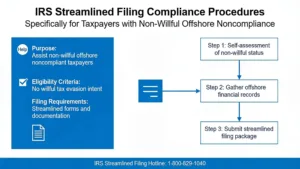
IRS Streamlined Filing Compliance Procedures
Taxpayers engaging with IRS streamlined filing compliance procedures must familiarize themselves with specific processes unique to this approach.
Eligibility Criteria
Before proceeding with the application, individuals must thoroughly understand the eligibility criteria outlined in earlier sections to ascertain their qualifications. This foundational knowledge informs the entire filing process.
Application Process
The application process requires adherence to all deadlines for submitting necessary documents and forms as identified within the procedural guidelines. Completeness is crucial in this step.
Specific Requirements
Each taxpayer must fulfill specific requirements defined by the IRS concerning non-willful behavior, documentation standards, and timelines for submitting their returns. Meeting these demands is essential in availing oneself of the streamlined filing options.
Important Notes
Several important notes regarding IRS streamlined filing should be considered. Taxpayers should consult IRS guidelines and materials for the most current requirements and processes to ensure compliance.
Overview of Compliance Procedures
Understanding the overall compliance procedures of tax filing is key for taxpayers considering their options.
Required Documentation
Gathering the required documentation is crucial to confirming eligibility. This includes tax forms, FBAR reports, and statements demonstrating non-willful conduct.
Potential Consequences of Non-Compliance
Failing to adhere to the streamlined filing procedures can lead to various consequences that taxpayers must be aware of.
Eligibility Requirements
Individuals not meeting eligibility requirements may face significant penalties or enhancements to their existing tax obligations, complicating their path to compliance.
Criteria for Eligibility
It is crucial to reiterate that strict adherence to eligibility criteria is essential for successful participation in the streamlined filing program. Failing to meet even one aspect could jeopardize a taxpayer’s compliance efforts.
Common Misconceptions
Many misconceptions surround the streamlined filing process, primarily concerning its accessibility and the complexities involved. Clarifying these myths is vital for taxpayers considering this option.
Penalty Relief
Taxpayers considering streamlined filing should also understand the aspects of penalty relief offered through these procedures.
Eligibility Criteria:
To access penalty relief, taxpayers must again demonstrate non-willful conduct and compliance with the specified filing deadlines laid out earlier in this article.
Types of Penalties That Can Be Relieved:
Various penalties, including failure-to-file fines and other related charges, may be waived under streamlined filing conditions, allowing individuals to minimize their financial burdens.
Application Process for Relief:

The application process for seeking penalty relief must follow the same thorough procedures as outlined for streamlined filing. This consistency emphasizes the importance of careful planning and compliance.
Important Notes:
Finally, it is vital to be aware of important notes surrounding penalty relief. Understanding these elements can help taxpayers actively engage with their compliance process.
Application of Penalty Relief
Proper application of penalty relief is a complex procedure that requires understanding both the tax implications and the proper channels for filing relief requests.
Types of Penalties Covered
Various tax penalties may be covered under this program, focusing on creating a streamlined process for taxpayers to resolve their tax burdens effectively.
Application of Penalty Relief in Streamlined Filing Benefits Without Appeal
In conclusion, the application of penalty relief within the framework of streamlined filing without appeal offers a comprehensive solution for taxpayers seeking compliance, providing multiple avenues for alleviating penalties while ensuring adherence to IRS mandates.
Comparison to Other Disclosure Options
Taxpayers often consider what options are available, particularly when comparing streamlined filing to traditional disclosure methodologies.
Traditional Disclosure Options
Traditional disclosure options can often prove complicated, yielding a more burdensome process than that which streamlined filing offers. By understanding these differences, taxpayers can appreciate the benefits of selecting a streamlined approach for their filing needs.
For individuals concerned about tax liens, understanding how to address them is crucial. A federal tax lien is the government’s legal claim against your property when you neglect or refuse to pay a tax debt. If you are facing such a situation, you may need to explore options for federal tax lien removal.
It’s important to be aware of the notices the IRS might send. For instance, receiving a CP504 notice means the IRS intends to levy your bank account if the tax debt is not settled within 30 days. Prompt action is necessary to avoid asset seizure.
Another critical notice is the LT11 or Letter 1058, Final Notice of Intent to Levy. This indicates the IRS will proceed with levying your accounts and assets, and you have a limited time to respond, potentially by filing Form 12153 to request a Collection Due Process hearing to discuss levy release.
The IRS has specific departments that handle tax collection, such as the **IRS CSE** (Continuous Service Enforcement) program, which aggressively pursues tax debt. Understanding the IRS CSE ultimate FAQ can help taxpayers comprehend the urgency and procedures involved.
For taxpayers who have not filed for several years, especially concerning foreign accounts, the FBAR penalty can be substantial. Streamlined filing procedures can be a pathway to mitigate these penalties, specifically addressing FBAR penalty streamlined filing requirements.