PFIC & Foreign Investments

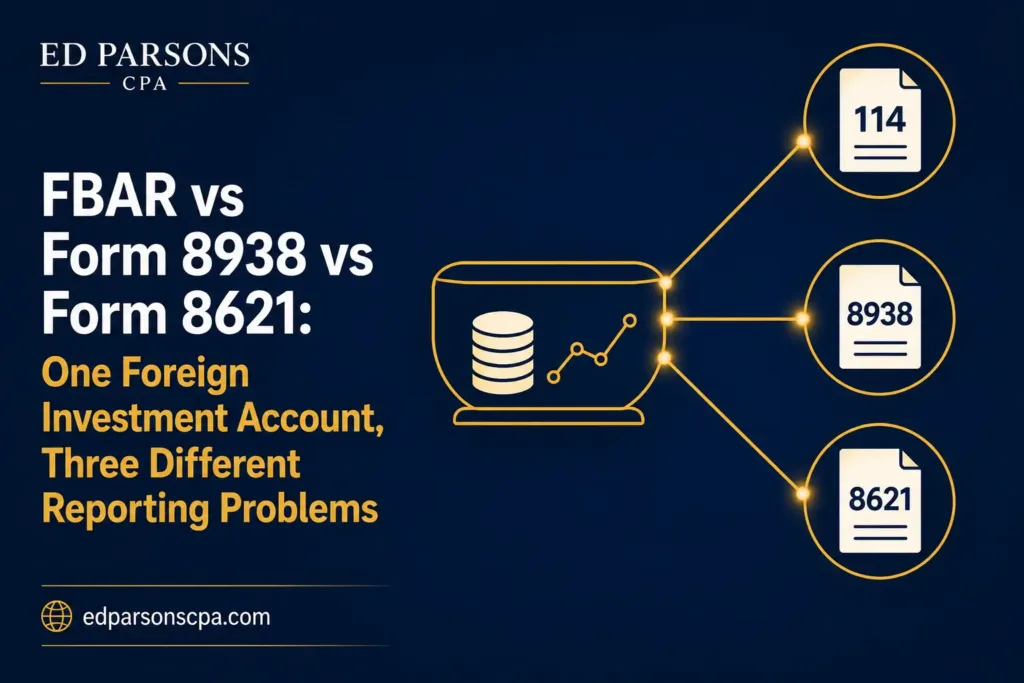
FBAR vs Form 8938 vs Form 8621: One Foreign Investment Account, Three Reporting Requirements

FBAR vs. Forms 8938 and 8621: Foreign Investment Reporting Rules

One foreign investment account can trigger three separate U.S. reports. The FBAR (FinCEN Form 114) discloses the account itself once all foreign accounts exceed $10,000 combined at any point in the year. Form 8938 discloses specified foreign financial assets on your tax return at thresholds starting at $50,000. Form 8621 reports and taxes each PFIC

FBAR vs Form 8938 vs Form 8621: One Foreign Investment Account, Three Different Reporting Problems Read More »

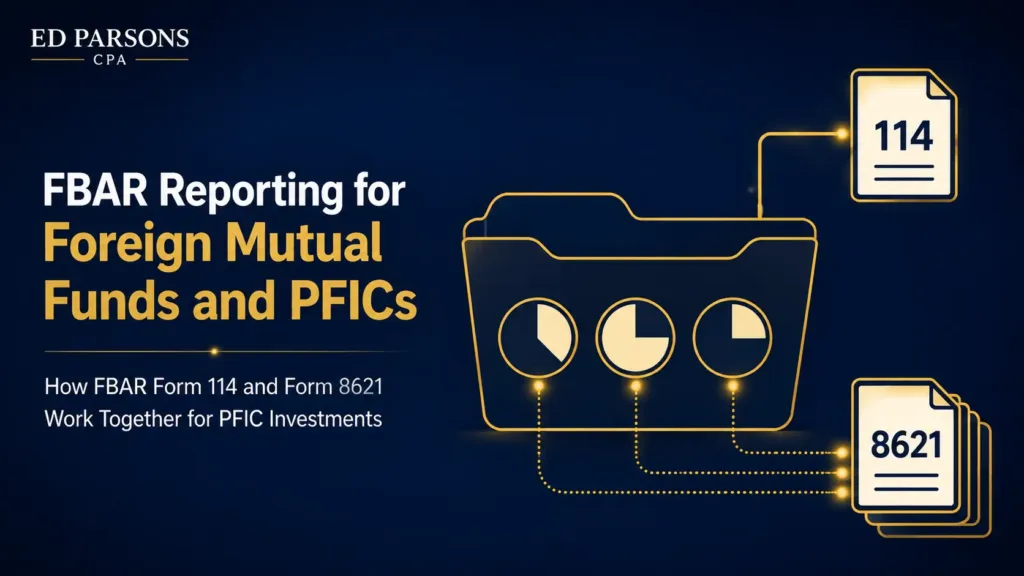
FBAR Reporting for Foreign Mutual Funds and PFICs | Form 114 & Form 8621 Guide

FBAR and PFICs: If I Own Foreign Mutual Funds or ETFs, What Goes on the FBAR?

A foreign brokerage or investment account generally belongs on the FBAR at its highest value for the year. The foreign mutual funds and ETFs inside that account are usually PFICs, which the IRS taxes and tracks separately on Form 8621, fund by fund. The FBAR reports the account. Form 8621 reports the fund. Filing one

FBAR and PFICs: If I Own Foreign Mutual Funds or ETFs, What Goes on the FBAR? Read More »

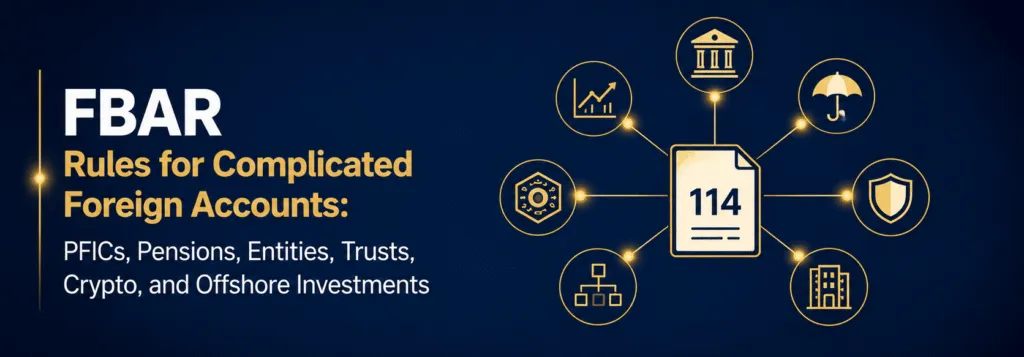
FBAR Rules for Complicated Foreign Accounts: PFICs, Pensions, Entities, Trusts, Crypto & Offshore Investments

FBAR Rules for Complicated Foreign Accounts: PFICs, Pensions, Entities, Trusts, Crypto, and Offshore Investments

The FBAR (FinCEN Form 114) is a Bank Secrecy Act report filed with FinCEN, not an IRS tax form. You must file it when the combined maximum value of all your foreign financial accounts exceeds $10,000 at any time during the year. The rule reaches accounts you own and accounts you can control, including foreign

FBAR Rules for Complicated Foreign Accounts: PFICs, Pensions, Entities, Trusts, Crypto, and Offshore Investments Read More »

PFICs Inside Superannuation or SMSFs: The Hidden Reporting Trap | Ed Parsons CPA

PFICs Inside Superannuation or SMSFs: The Hidden Reporting Trap

Australian managed funds, ETFs, and listed investment companies are commonly analyzed as passive foreign investment companies under U.S. rules. Holding them inside super does not automatically shield you: when you are treated as owning the fund’s investments, as SMSF members often are, each pooled holding can carry its own Form 8621 and its own harsh

PFICs Inside Superannuation or SMSFs: The Hidden Reporting Trap Read More »

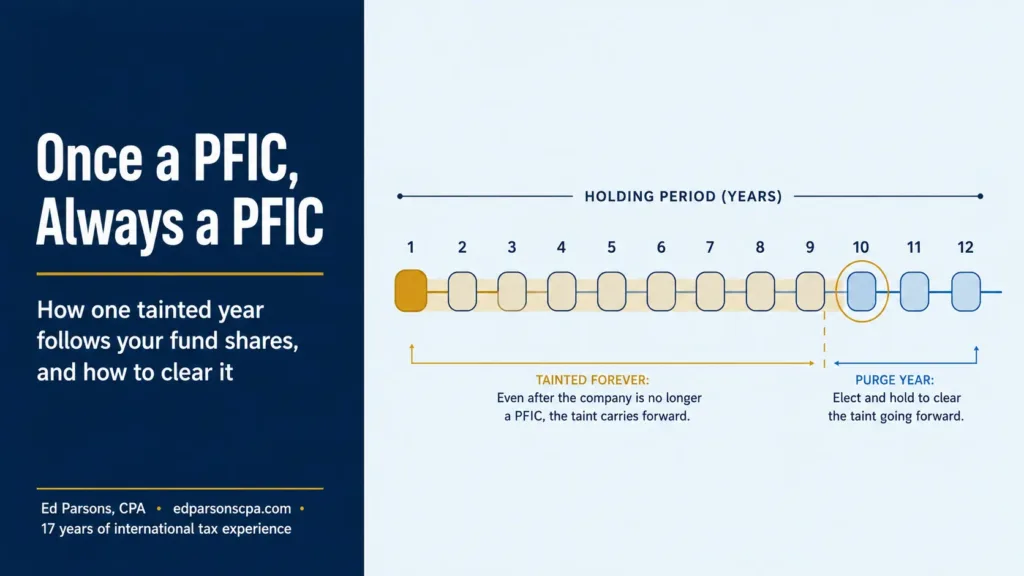
PFIC holding period timeline illustrating "once a PFIC, always a PFIC" rule and purging election options.

Once a PFIC, Always a PFIC: The Section 1298(b)(1) Rule Explained

Under IRC Section 1298(b)(1), the “once a PFIC, always a PFIC” rule, if a foreign corporation is a passive foreign investment company for even one year during the time you hold it, your stock is treated as PFIC stock for the rest of your holding period, even if the company later stops being a PFIC.

Once a PFIC, Always a PFIC: The Section 1298(b)(1) Rule Explained Read More »

Colombian investment funds and PFIC reporting for U.S. citizens, with rising graph over a Colombian cityscape.

Colombian Investment Funds and PFIC Reporting for U.S. Citizens

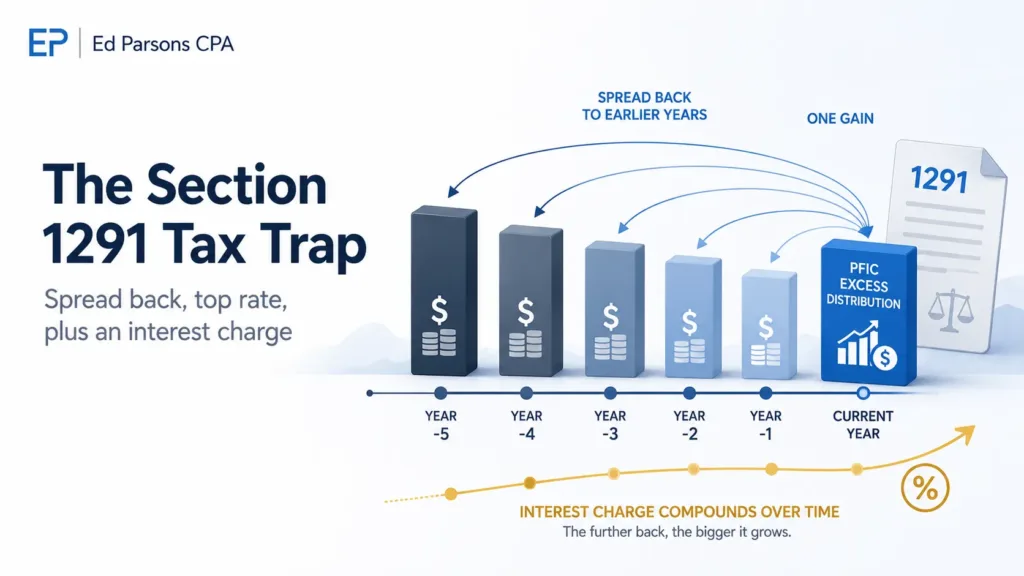
If you are a U.S. citizen holding a Colombian investment fund, the IRS almost certainly treats it as a passive foreign investment company, or PFIC. That label triggers one of the harshest regimes in the tax code. By default, your gains are spread across your whole holding period, taxed at the highest ordinary rates, and

Colombian Investment Funds and PFIC Reporting for U.S. Citizens Read More »

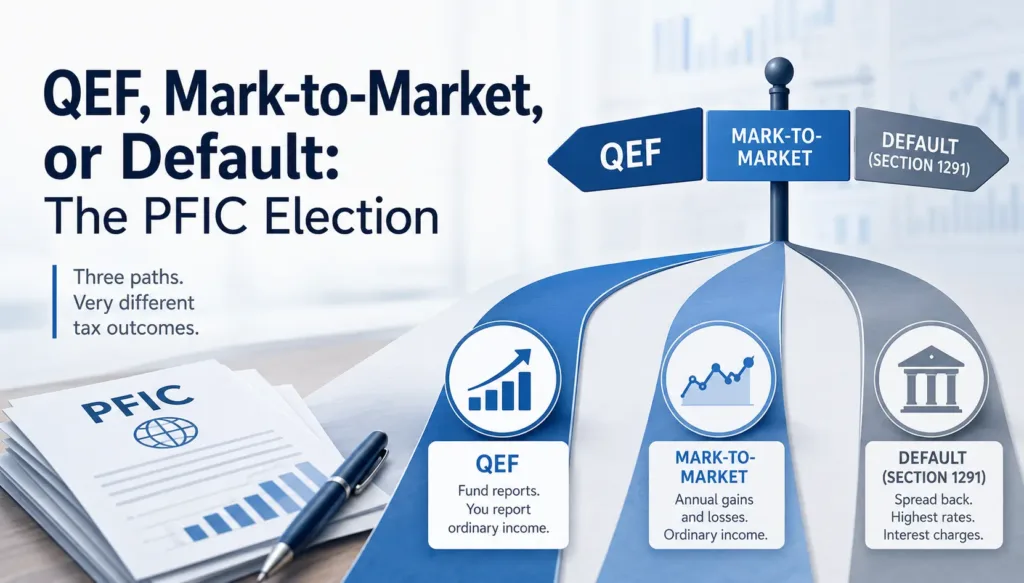
PFIC tax election options: QEF, Mark-to-Market, and Default Section 1291 illustrated with directional signage and financial graphics.

QEF, Mark-to-Market, or Default: The PFIC Election

By Edward Parsons, CPA  |  Ed Parsons CPA, Doral, Florida  |  Representing taxpayers nationwide  | A PFIC can be taxed three ways. The default Section 1291 regime is the harsh fallback. A QEF election usually gives the best result, taxing you each year on the fund’s earnings while preserving capital gain character, but it needs

QEF, Mark-to-Market, or Default: The PFIC Election Read More »

Yes, I can Meet In …
I am Available to Represent You in …